Separate cap over the body
A short or full-depth cap slides over the body and can create a visible reveal or uninterrupted exterior. Specify overlap length, radial fit, venting behavior, opening effort, cap retention, and which part the user holds.

Cylindrical packaging specification
Define style, usable height, wall and edge construction, cap or end behavior, product removal, insert, wrap artwork, and master-carton packing as one cylindrical system.
Tube style selection
The structure determines overlap, usable space, opening force, product access, component count, artwork breaks, packing direction, and the external size that reaches the master carton.
A short or full-depth cap slides over the body and can create a visible reveal or uninterrupted exterior. Specify overlap length, radial fit, venting behavior, opening effort, cap retention, and which part the user holds.
A continuous outer cylinder keeps the primary graphics on one body while the opening is handled through a selected cap, plug, or end route. Confirm whether the end is removable, fixed, hinged, recessed, or flush; available constructions vary.
An internal shoulder can locate a cap and create a controlled reveal where the selected manufacturing route permits. Shoulder height, exposure, fit, edge alignment, wall buildup, and product clearance need their own dimensions.
Construction availability: tube style, winding route, core diameter, cap, shoulder, end, and tooling are confirmed against the requested dimensions, product, quantity, and production source. A visual reference does not establish the internal construction.
Diameter and height
A round product does not automatically fit a tube of the same stated diameter. Product variation, out-of-round geometry, wrap buildup, insert walls, closures, and removal clearance affect the finished specification.
Scroll horizontally to view all columns →
| Dimension | What to provide | What to verify |
|---|---|---|
| Product envelope | Maximum diameter or diagonal, height, weight, projections, cap or lid, flexible parts, and manufacturing tolerance. | Loading path, tight points, permitted contact, center of gravity, orientation, and clearance across product variation. |
| Internal diameter | Required clear diameter after lining, wrap, shoulder, or insert components are included. | Loaded fit, radial movement, air and friction during removal, insert seating, and roundness over the usable length. |
| Usable internal height | Clear height between the finished base, cap, end, platform, padding, or retaining component. | Headspace, product compression, end clearance, grip access, and whether the lid loads the product when closed. |
| External envelope | Maximum outer diameter and overall closed height, including cap, edge turns, labels, or projecting end components. | Retail shelf, display, shipper, divider, carton, pallet, and any dimensional limit in the delivery system. |
| Fit tolerances | Critical functional dimensions, product variation, tube variation, storage conditions, and agreed measuring method. | Cap engagement, opening force, shoulder alignment, product loading and removal, wobble, and repeatability against the approved sample. |
Use the paper tube inside-diameter and usable-height fit planner before requesting the structural sample.
Wall, edge, and seam
Core plies, adhesive, winding direction, outer wrap, inner surface, ends, and edge treatment combine to control stiffness, roundness, appearance, and cap fit.
Lid and end construction
A round sidewall still needs a top and bottom that locate, retain, open, and carry the product. Exact materials, forming routes, and contact suitability are project-dependent.
Scroll horizontally to view all columns →
| Construction area | Decision inputs | Approval checks |
|---|---|---|
| Telescopic paper cap | Cap depth, wall buildup, overlap, shoulder or neck, desired reveal, opening grip, and brand panel continuity. | Engagement, start and running friction, accidental release, air resistance, edge alignment, removal grip, and reclosure. |
| Paper end or plug | Fixed or removable function, recessed or flush appearance, end thickness, product load, adhesive zone, and opening direction. | End seating, bond, deflection, edge exposure, push-through risk, access, and whether the product or insert bears on the end. |
| Alternative end component | Requested metal, molded, composite, or specialty component, regulatory and material restrictions, product contact, and disposal route. | Exact available material and finish, fit, sharp edges, corrosion or marking concerns, retention, separation, and required documentation. |
| Base support | Product weight, concentrated load, insert or platform, impact direction, stacking, and carton orientation. | Loaded deformation, insert seating, end movement, wall-to-end connection, clearance, and behavior during intended handling. |
| Barrier or lining | Whether the tube is secondary packaging or may contact the product, plus moisture, odor, grease, aroma, or other barrier requirements. | Selected material system, seam and end interfaces, declared use, required compliance documents, and a project-specific validation plan. |
Contact warning: do not assume a paper tube, ink, adhesive, coating, end, or insert is suitable for direct food, cosmetic, pharmaceutical, or other regulated contact. Disclose the use and required market documentation before material selection.
Product removal and insert
A close cylindrical fit can trap air, create surface friction, hide the grip area, or pull an insert out with the product. Removal should be approved as part of the loaded package.
Cylindrical wrap artwork
A flat artwork file becomes a curved viewing surface with an overlap, edge turns, separate cap geometry, and changing sightlines. Approve placement on the production structure.
Build from the quoted production dieline, including wrap overlap, bleed, trim, edge turns, cap and base pieces, safe zones, and any visible core line.
Set the primary viewing angle, seam location, barcode position, lid-to-body orientation, reading direction, and how graphics align when the tube is closed.
Review small copy, foil, embossing, debossing, varnish, lamination, dark solids, and elements near seams or edges against the selected paper and process availability.
Check color, scale, front position, seam interruption, cap alignment, finish register, scuff risk, and barcode readability on a representative cylindrical wrap.
Sample and quality control
Sampling route, timing, inspection method, and production criteria are confirmed after dimensions, construction, materials, artwork, quantities, destination, and contact requirements are known.
Scroll horizontally to view all columns →
| Checkpoint | Structural review | Appearance and packing review |
|---|---|---|
| Dimensions | Internal and external diameter, usable and overall height, wall buildup, cap depth, overlap, shoulder, and end position. | Measurement method, reference orientation, drawing revision, artwork relationship, and carton fit. |
| Geometry | Roundness, straightness, end squareness, edge condition, core or wrap seam, cap travel, and end seating. | Visible lean, gap uniformity, surface waviness, edge exposure, seam lift, wrap bubbles, and alignment. |
| Loaded function | Product loading, radial fit, headspace, insert retention, air resistance, grip, removal, reclosure, and end support. | Presentation angle, product visibility, accessory order, handling marks, and the intended opening sequence. |
| Artwork and finish | Correct wrap and component version, seam position, safe areas, edge turns, and lid-to-body orientation. | Color, copy, barcode, foil or emboss register, coating, rub, scratches, glue marks, and agreed visual reference. |
| Pack-out | Unit protection, orientation, divider or cell, units per layer and carton, carton dimensions, and gross weight. | Surface-to-surface rub, mixed-SKU identification, shipping marks, carton closure, and pallet pattern if required. |
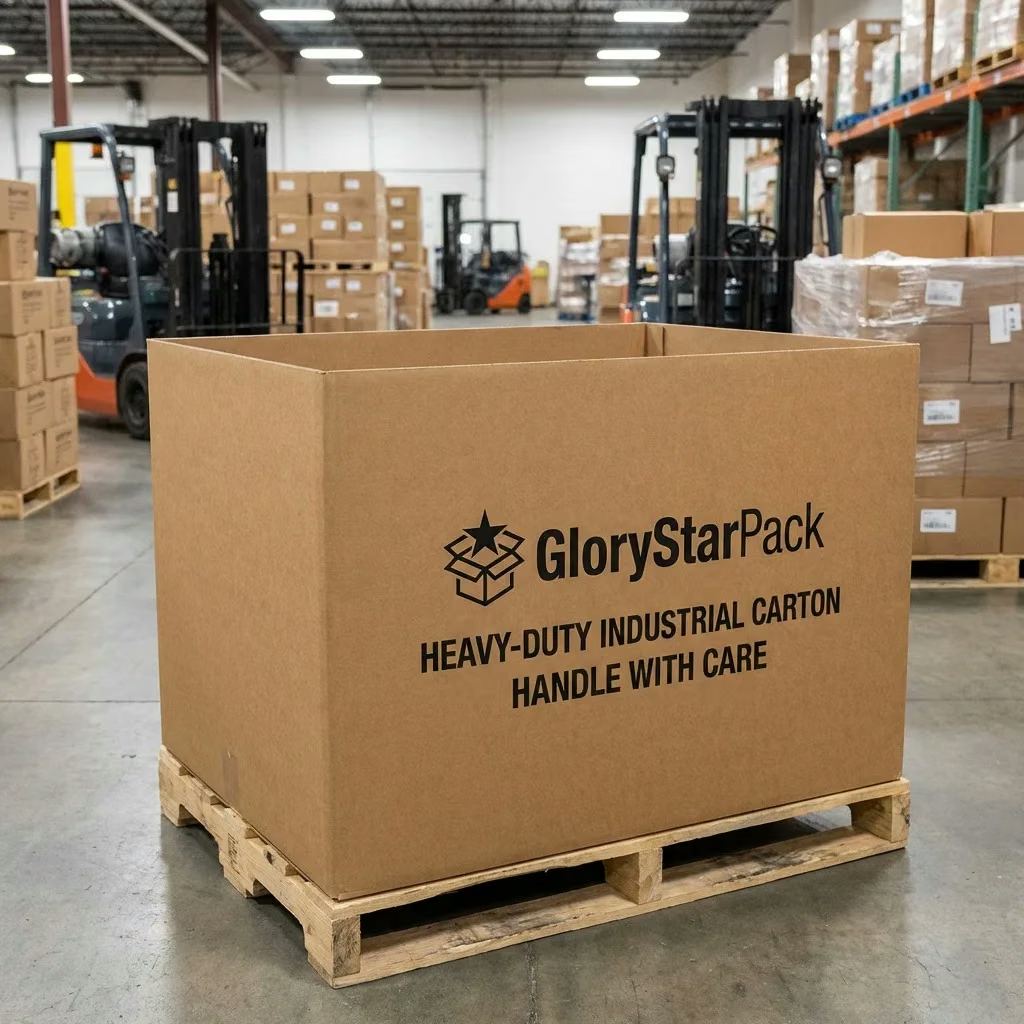
Master-carton specification
Finished tubes normally retain their cylindrical volume. Carton efficiency, surface protection, end loading, and movement control therefore need to be planned before freight is quoted.
Buyer questions
Final materials, ends, fit, finish, contact documentation, sampling, and carton recommendations depend on the actual product, dimensions, quantity, use, and destination.
Quote custom tube packaging
Send the maximum product dimensions and weight, quantity, loading direction, preferred tube style and ends, insert or lift needs, artwork, contact requirements, destination, and carton limits. We will use the brief to identify the next structural and approval decisions.