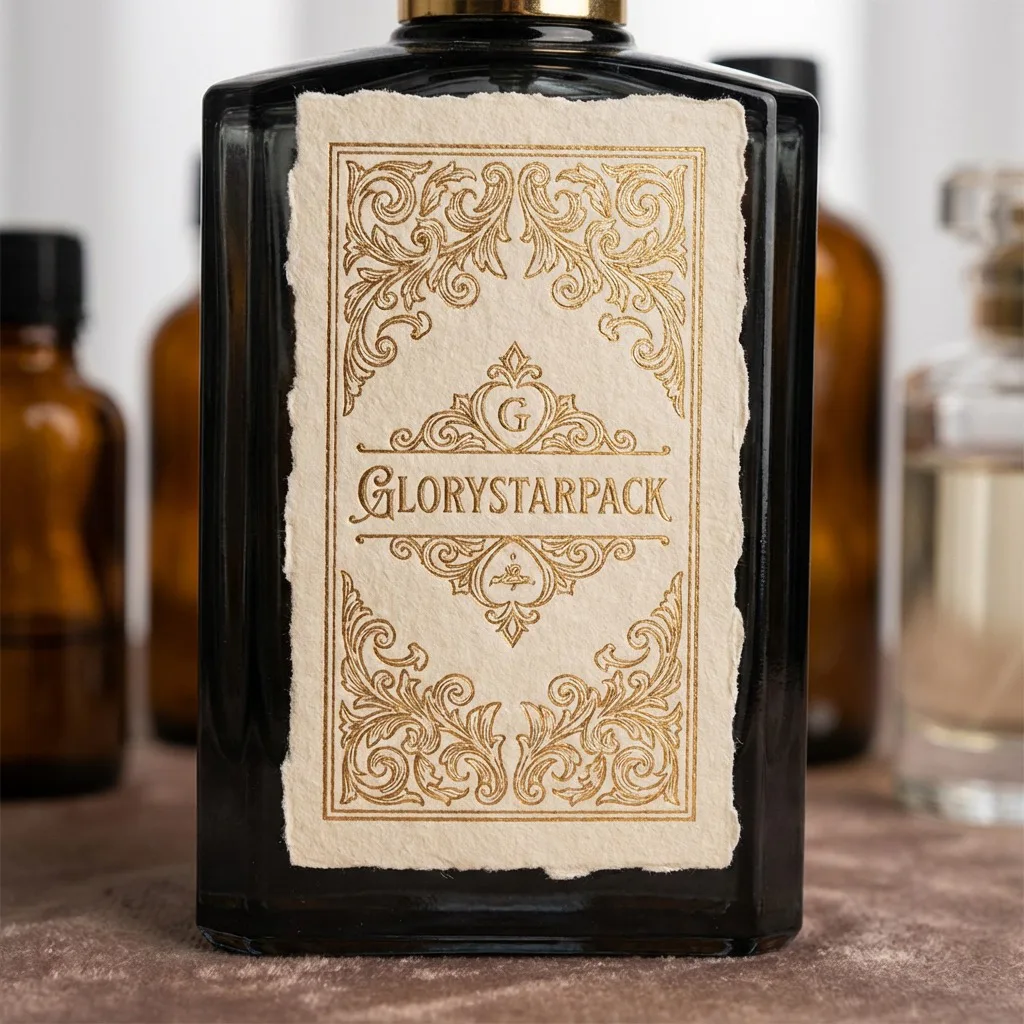
 WL–01
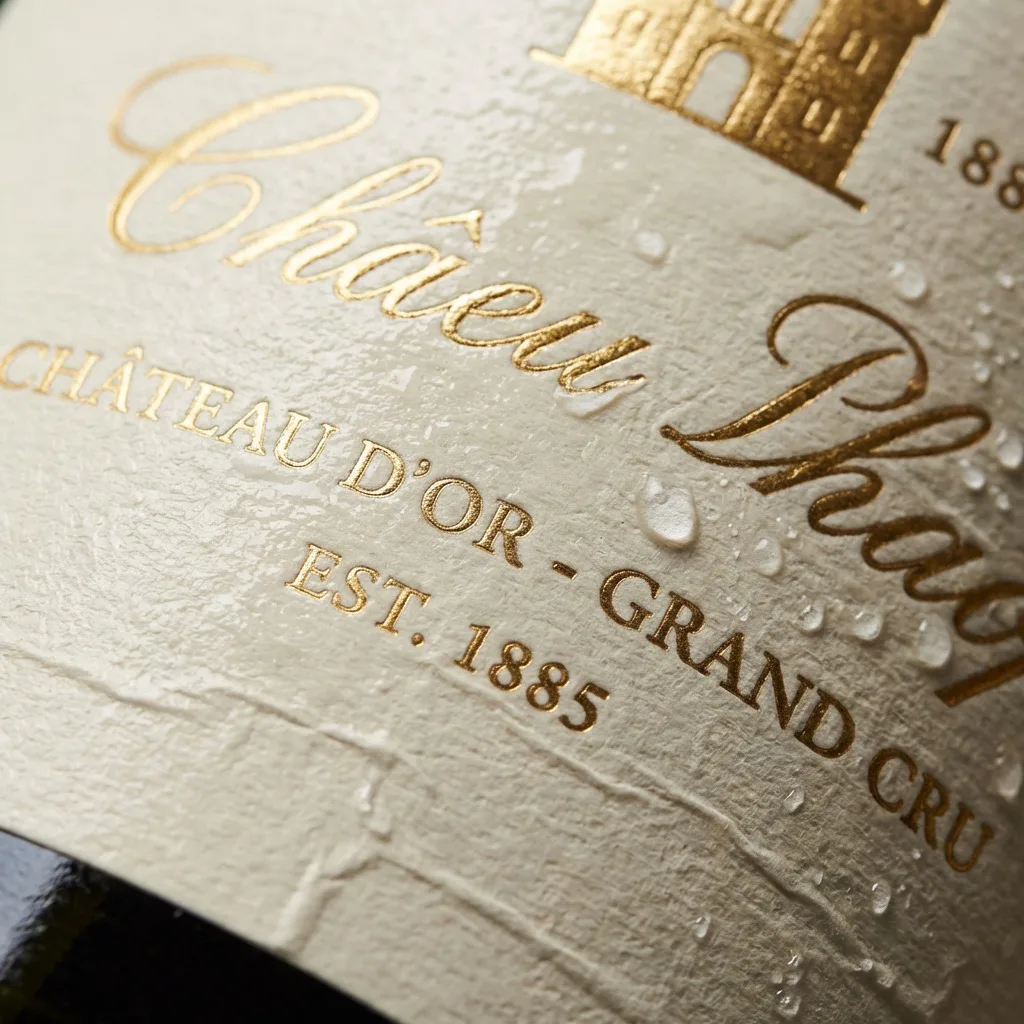
WL–01Textured paper
Uncoated and tactile papers for a natural, heritage, or cellar-led presentation. Wet-strength constructions should be reviewed where condensation is expected.
- Natural grain
- Foil ready
- Emboss option
Wine and spirits label service
Specify the stock, adhesive, print, foil, embossing, and roll format around the container, cellar conditions, application line, and shelf presentation.
Label constructions
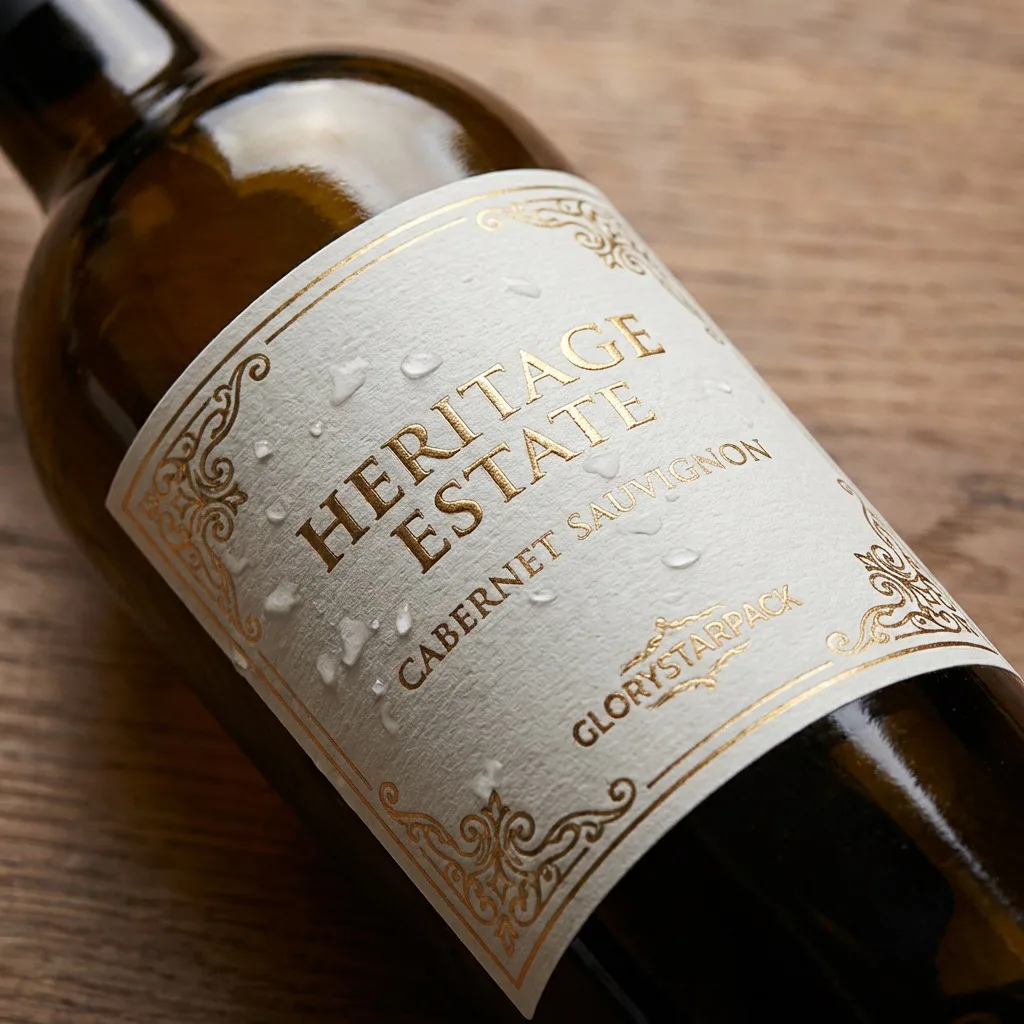
A reserve wine stored in a cellar, a white wine served from an ice bucket, and a spirits bottle handled behind a bar expose labels to different moisture, abrasion, and presentation demands.
WL–01Uncoated and tactile papers for a natural, heritage, or cellar-led presentation. Wet-strength constructions should be reviewed where condensation is expected.
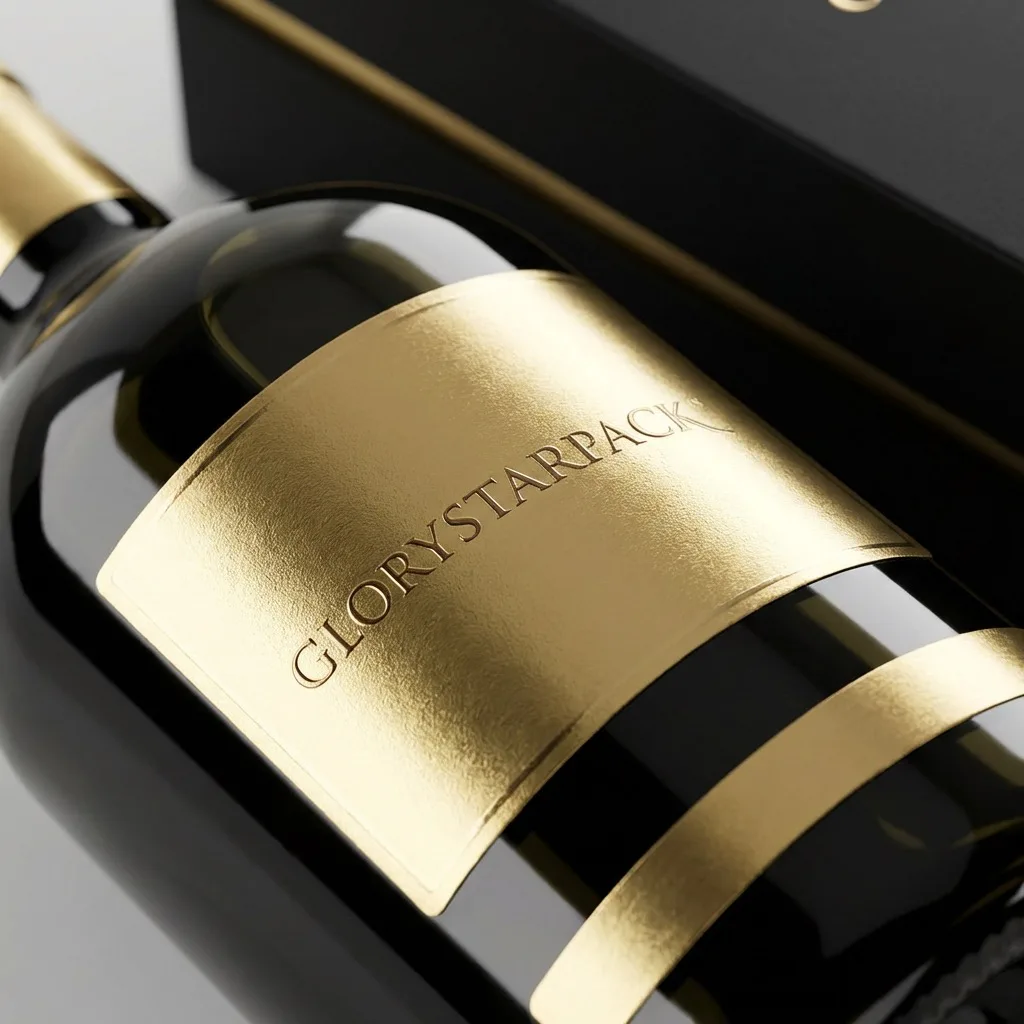 WL–02
WL–02Foil, metallic film, or selective reflective areas can establish hierarchy without covering the full label in glare.
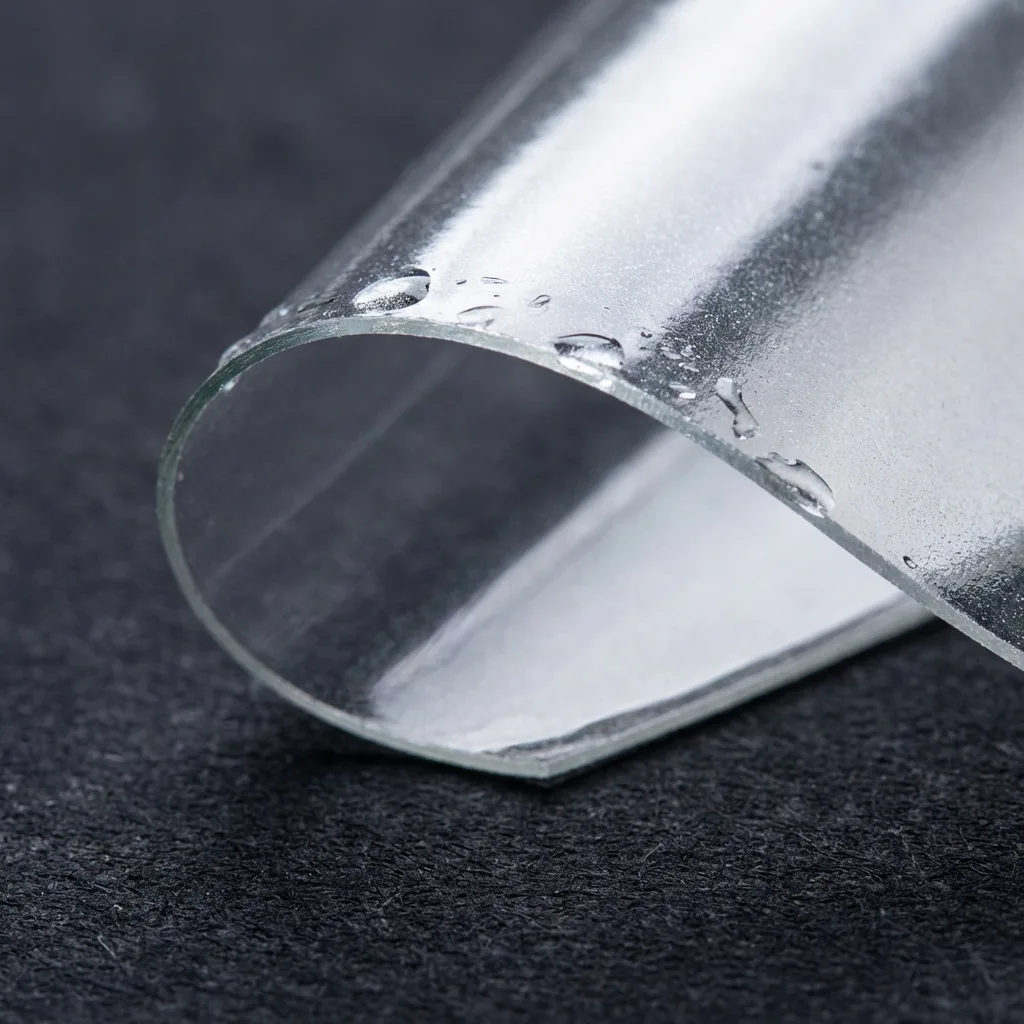 WL–03
WL–03A moisture-resistant route for smooth containers and no-label looks. White ink, adhesive clarity, and bottle color affect the final appearance.
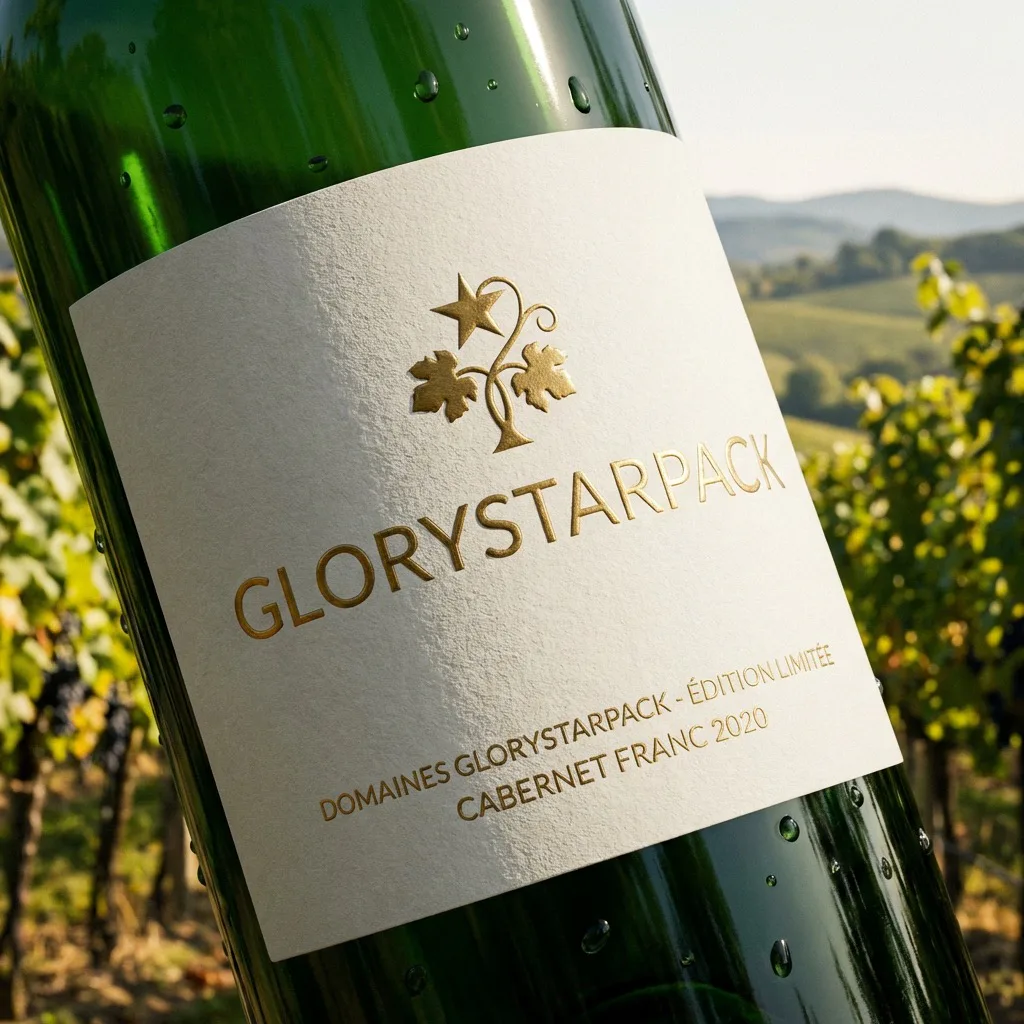
Wet strength and condensation
Moisture can darken paper, lift edges, soften fibers, or expose adhesive haze. The risk depends on the face stock, adhesive, varnish or laminate, bottle coating, label shape, application conditions, and time between labeling and use.
A material described as “water resistant” is not automatically suitable for every cold, wet, coated, or curved bottle. Approve the complete label construction on the intended container.
Build a bottle-specific condensation, ice-bucket, and adhesive test plan
Production specification
Artwork is only one part of a usable label order. Container data and converting requirements determine whether finished rolls can run cleanly on your line.
Scroll horizontally to view all columns →
| Decision | Information to provide | What to verify |
|---|---|---|
| Bottle | Material, coating, diameter or taper, application panel, and a representative bottle sample. | Adhesion, edge lift, wrinkles, label alignment, and visual show-through. |
| Environment | Application temperature, service temperature, refrigeration, condensation, ice bucket, and humidity exposure. | Wet strength, adhesive hold, ink protection, scuff resistance, and appearance after conditioning. |
| Face stock | Textured or coated paper, wet-strength paper, clear or white film, metallic stock, and desired opacity. | Print result, tactile character, foil compatibility, stiffness, and die-cut behavior. |
| Adhesive | Permanent or removable goal, bottle surface, label size, curvature, and expected shelf life. | Initial tack, final adhesion, repositioning needs, and residue expectations. |
| Print + finish | Color references, white ink, varnish or laminate, foil areas, emboss or deboss, and legal copy. | Color target, small text, barcode readability, foil coverage, surface protection, and finishing registration. |
| Die + sets | Finished shape, corner radius, front and back set relationship, neck label, and label-to-label gap. | Die line, liner release, matrix stripping, spacing, and set alignment during application. |
| Roll format | Unwind direction, core inside diameter, maximum roll outside diameter, web width, and labels per roll. | Applicator compatibility, splice policy, roll weight, label orientation, and changeover handling. |
| Approval | Final artwork, dieline, color reference, serialized data if any, and named approvers. | Digital proof scope, physical material proof, bottle test, and signed production specification. |
Foil and emboss registration
Registered foil and embossing can combine reflectivity with relief, but the artwork must leave room for the paper, foil carrier, dies, pressure, and normal converting movement to work together.
From bottle to finished roll
A useful approval path isolates structural, material, visual, and application risks before finished labels reach the bottling line.
Share the container, label dimensions, environment, application method, quantity, and artwork.
Review face stock, adhesive, ink, protection, finish, die shape, and supply format as one construction.
Check artwork, color, finish registration, bottle adhesion, moisture exposure, and roll compatibility.
Produce to the approved specification, rewind to the agreed format, inspect, pack, and identify each roll.
Buyer questions
Final material, production, and timing recommendations depend on the actual bottle, artwork, quantity, and use conditions.
Quote custom wine labels
Send the label size, quantity, bottle details, service environment, application format, destination, and artwork. We will use those inputs to identify the next material and production questions.