Short answer
Test the complete label on the real bottle.
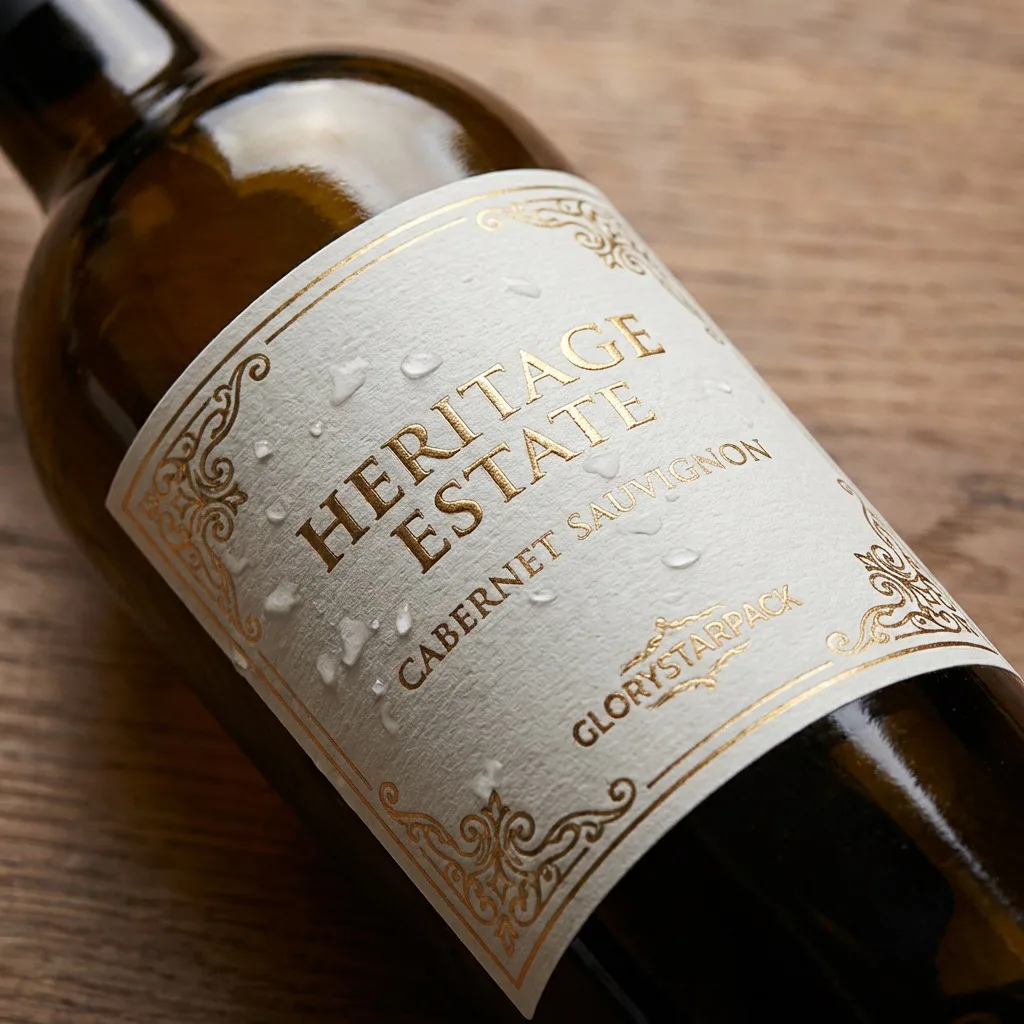
A reliable wine-label trial uses representative filled bottles, the intended face material, adhesive, ink, varnish or laminate, foil and embossing, the actual application conditions, a defined dwell period, and the real cold-and-wet exposure sequence. A flat adhesive sample or a dry visual proof cannot predict performance on every coated, tapered, chilled, or condensated bottle.
Separate refrigeration, condensation, ice-bucket immersion, wet handling, abrasion, storage, and any intended wash-off requirement. They create different stresses and need their own recorded conditions and acceptance rules.
“Waterproof” is not a test method. State the surface, temperature, time, water contact, handling, defects, sample quantity, and acceptable result.
Exposure matrix
Do not combine every wet condition into one claim.
Use conditions from the real filling line, warehouse, cold chain, hospitality service, and consumer handling rather than selecting an arbitrary test duration.
Scroll horizontally to view all columns →
| Condition | What to record | What to inspect |
|---|---|---|
| Cold storage | Bottle and room temperature, duration, humidity, orientation, and carton or rack conditions. | Edge lift, label movement, paper distortion, adhesive haze, and finish appearance. |
| Condensation cycle | Starting temperature, room temperature and humidity, cycle count, drying time, and wet handling. | Darkening, opacity loss, wrinkles, bubbles, sliding, edge lift, and recovery after drying. |
| Ice bucket | Ice-to-water condition, immersion depth, water temperature, duration, bottle movement, and rubbing. | Delamination, fiber damage, ink or foil loss, adhesive hold, label shift, and edge condition. |
| Service handling | Wet hands, cloth wiping, gripping location, bottle rotation, contact time, and repetition. | Wet rub, scuff, ink transfer, foil damage, surface change, and label movement. |
| Wash-off goal | Returnable-bottle process, chemistry, temperature, time, equipment, and residue requirement. | Removal, adhesive residue, glass recovery, contamination, and separation behavior. |
Bottle and application
Adhesion begins before the bottle enters the chiller.
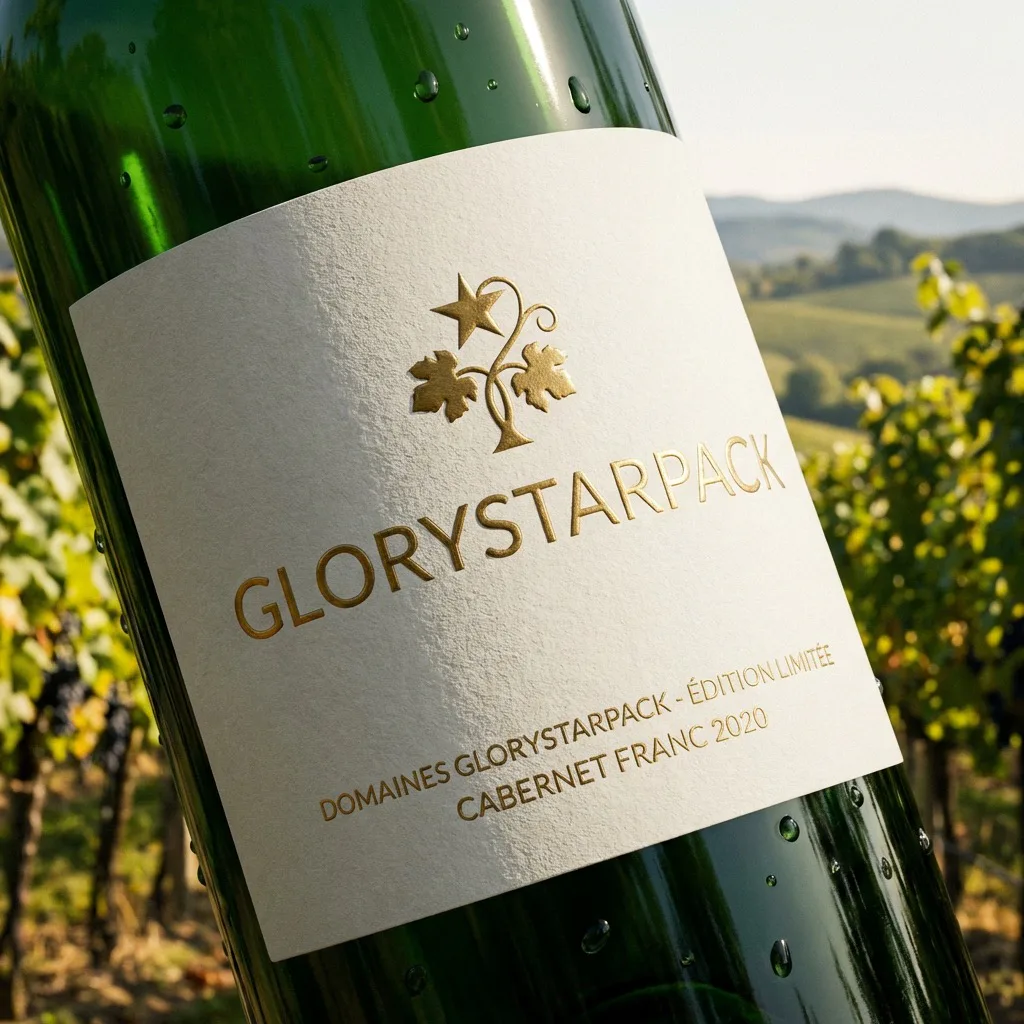
Glass chemistry, recycled content, coatings, surface treatments, mold-release or filling-line residues, bottle diameter, taper, seams, texture, and curvature can change adhesive contact. Use bottles from the intended supply route, not only a smooth laboratory panel.
- Record bottle supplier, material, coating or treatment, diameter, taper, seam, and label panel
- Define cleaning, drying, handling, bottle temperature, room temperature, humidity, and contamination control
- Apply with the intended hand or machine method, pressure, speed, roll direction, core, gap, and label orientation
- Set the dwell time between application and refrigeration, water exposure, packing, or handling
- Check large labels, neck labels, complex die shapes, heavy embellishment, and tight curves separately
Complete construction
Select face, adhesive, print, and finish as one system.
A moisture-resistant face does not correct the wrong adhesive, and strong adhesion does not protect an unqualified print or decorative layer.
Preserve texture with a qualified wet-strength construction
Review fiber stability, opacity when wet, coating, varnish, ink, foil, emboss, edge exposure, and the adhesive paired with the selected paper. Ordinary decorative paper should not be assumed to survive condensation or immersion.
Use film where the appearance and exposure support it
Check conformability, stiffness, clarity or white opacity, adhesive haze, label edge visibility, scuffing, white ink, bottle color, and recycling or removability requirements. Film is not a universal answer for every bottle.
Match tack and long-term hold to the process
Define application temperature, service temperature, condensation at application, bottle surface, curve, label size, dwell, moisture, storage, and whether permanent hold, repositioning, or controlled wash-off is required.
For broader splash, immersion, oil, abrasion, temperature, outdoor, and barcode requirements, use the durable-label testing guide and matrix planner.
Representative trial
Run the sequence the bottle will experience.
Write the procedure before the trial, keep an unexposed control, and record observations at fixed points so two constructions can be compared fairly.
- 1 · ConditionCondition labels and representative filled bottles under recorded temperature and humidity; note bottle lot, label lot, construction, artwork revision, and sample quantity.
- 2 · PrepareUse the documented cleaning and handling method. Confirm that the label panel is in the intended dry, cold, or condensated condition before application.
- 3 · ApplyApply by the intended line or controlled representative method. Record speed, pressure, orientation, alignment, roll format, wrinkles, trapped air, and initial position.
- 4 · DwellLeave samples undisturbed for the agreed time at the agreed temperature before packing, cooling, condensation, water, or handling starts.
- 5 · ExposeRun cold storage, condensation, ice-and-water contact, warming, wet handling, wiping, and repeat cycles in the planned order. Keep exposure conditions consistent across samples.
- 6 · InspectObserve immediately, during exposure, after removal, after wet handling, and after drying. Photograph the same label areas and record defects by time and sample.
Acceptance record
Define failure before judging the sample.
Appearance changes and adhesion failures are easier to compare when the observation location, timing, measurement rule, and response are fixed in advance.
Scroll horizontally to view all columns →
| Observation | Approval question | Useful record |
|---|---|---|
| Edge lift or sliding | Is any movement allowed, and at which edge, area, time, or exposure stage? | Photograph, location, maximum lift or movement rule, affected samples, and time first observed. |
| Wrinkles or bubbles | Are temporary wet wrinkles acceptable if they recover after drying? | Count or area rule, wet and dry comparison, bottle curve, label orientation, and recovery time. |
| Opacity or haze | How much paper darkening, show-through, or adhesive whitening is acceptable? | Controlled before-and-after photos on the filled bottle under the same lighting and background. |
| Ink, varnish, foil, emboss | Must the surface withstand wet rubbing, wiping, bottle contact, or abrasion? | Defined rub method, cycle count, force or handling description, transfer, loss, and visual limit. |
| Removal behavior | Should the label remain permanent, release cleanly, or wash off in a named process? | Time, temperature, solution, equipment, residue, fiber, separation, and pass-or-fail result. |
Carry the signed test result into the packaging sample approval record.
Official references
Use material data and test methods as inputs—not universal promises.
These industry sources describe wine-label materials, cold-and-wet conditions, ice-bucket exposure, and standardized label testing. Final suitability still depends on the complete applied construction.
- Avery Dennison wine and spirits labelsThe official portfolio discusses heavy condensation, initial tack, label positioning, and cold-box or ice-bucket performance for specific constructions. Review the official wine and spirits page.
- Avery Dennison wine label handbookThe handbook distinguishes wet-labeling conditions and an ice-bucket immersion test while warning that buyers must determine suitability for their own use. Read the official handbook.
- UPM Raflatac wine and beverage materialsThe official industry page separates dry conditions from humid refrigeration and ice-bucket use, and describes treated paper, film, and application-specific material routes. Review the official material overview.
- FINAT test methodsFINAT maintains test methods used across the self-adhesive label industry and emphasizes application-oriented testing and controlled procedures. See the official test-method overview.
RFQ checklist
Send the bottle, label system, application, and exposure in one brief.
- bottle supplier, material, color, coating or treatment, diameter, taper, seam, label panel, and representative filled samples;
- finished label size, shape, front/back/neck layout, overlap or seam clearance, artwork, versions, and quantity by version;
- hand or machine application, line model if known, speed, roll direction, core, outside diameter, gap, orientation, bottle temperature, and room conditions;
- paper or film direction, color and opacity, adhesive goal, ink, white ink, varnish, laminate, foil, emboss, deboss, and die-cut detail;
- dwell before packing or chilling, refrigeration temperature and time, condensation cycle, ice-bucket condition, wet handling, wiping, scuffing, and drying;
- pass-or-fail rules, sample quantity, observation times, retained control, approval owner, destination, target date, and any wash-off or recycling requirement.
Ask the quotation to identify which construction is proposed, which tests are included, which conditions remain buyer-specific, and what evidence is required before bulk release. Do not accept an absolute performance claim that omits the bottle, application, exposure, and acceptance method.