Approval rule
A sample is useful only when its purpose is defined.
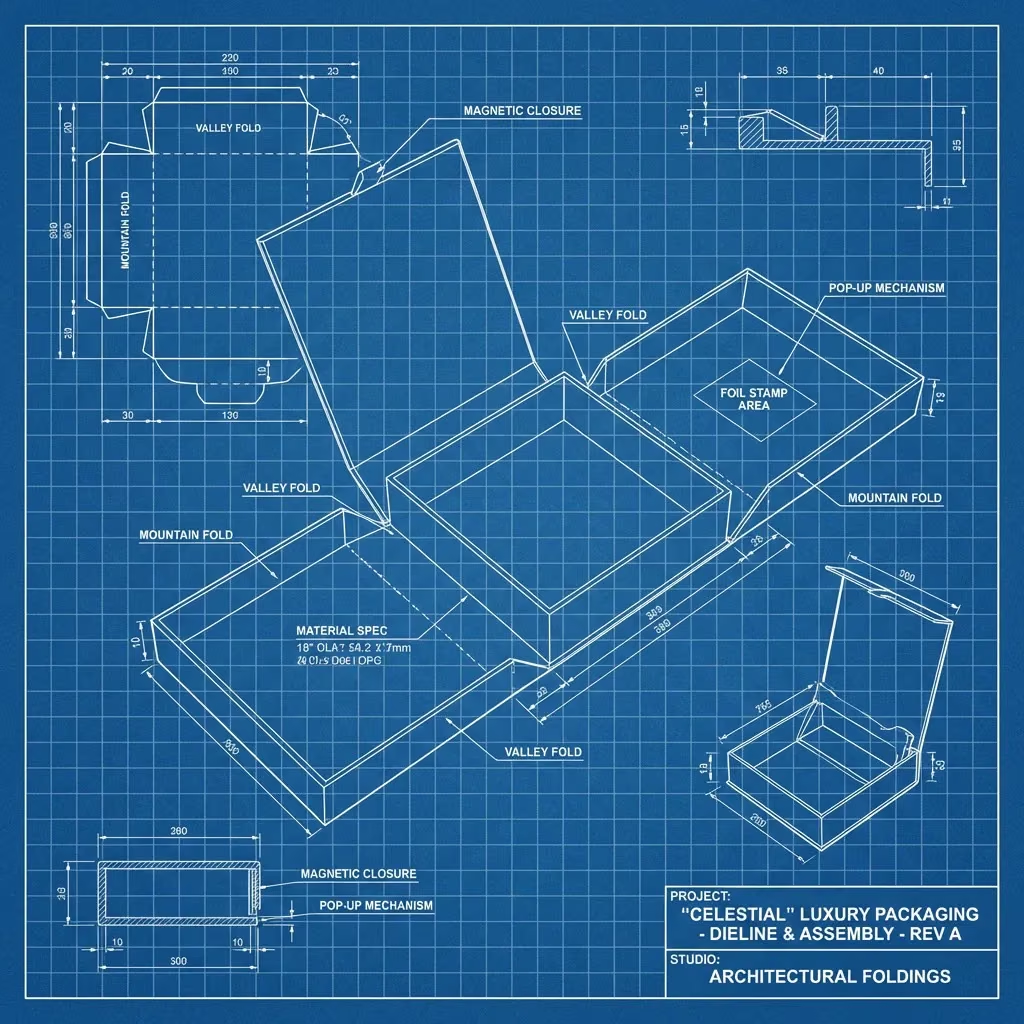
A structural white sample, printed mockup, finish swatch, and production-intent sample answer different questions. Before reviewing one, identify what it represents and what it does not. A digital print can help check layout and copy but may not prove production color. A flat foil swatch can show a finish direction but cannot prove registration after a box is wrapped and assembled.
The approval should name the sample type, revision, material, manufacturing route, included product, and criteria being accepted. If an important feature is simulated, substituted, or still pending, record that exception instead of treating the whole sample as production-approved.
Do not approve from photographs alone. Photos help document a sample, but screen color, scale, texture, fit, odor, opening force, and removal behavior require the physical item or another agreed test method.
Choose the right proof
Match the sample to the decision.
One sample rarely proves every production requirement. Build an approval path around the risks that matter to the project.
Scroll horizontally to view all columns →
| Sample type | Useful for | Does not automatically prove |
|---|---|---|
| Structural white sample | Dimensions, opening, fit, insert location, product removal, assembly, and basic pack-out. | Production paper, printed color, foil, coating, texture, glue appearance, or final surface durability. |
| Printed mockup | Artwork position, hierarchy, copy, orientation, panel sequence, and approximate visual direction. | Production print method, exact color, wrap registration, finishing coverage, or bulk construction consistency. |
| Material or finish swatch | Comparing paper texture, color direction, laminate, foil, emboss depth, label stock, or adhesive route. | The way the finish behaves on folds, curves, wrapped corners, seams, labels, or the complete package. |
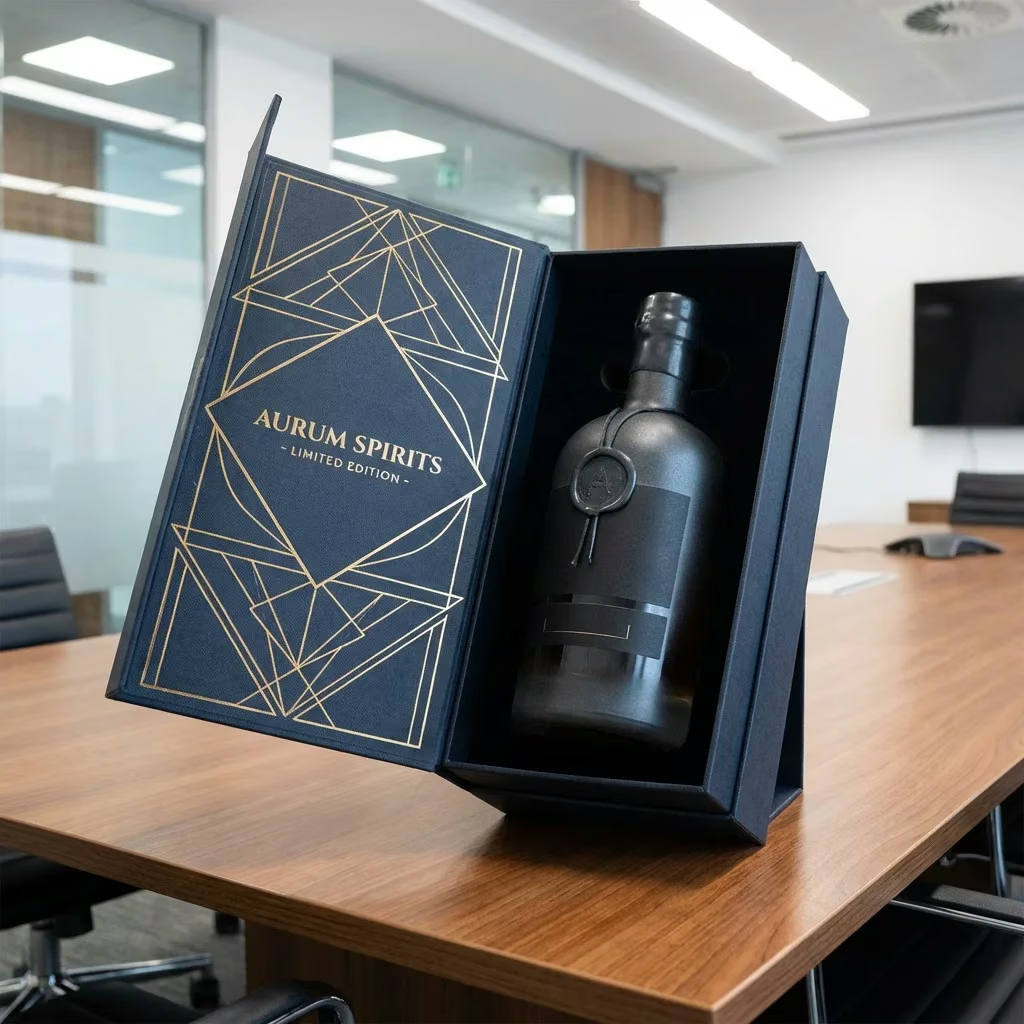
| Production-intent sample | Combined structure, material, print, finish, assembly, fit, and handling review using the intended process. | Every bulk-unit variation, transit result, regulatory requirement, or performance condition unless those are separately specified and checked. |
Before the review
Prepare a controlled test set.
Use a production-equivalent product wherever practical. Include every component that changes the packed envelope: cap, pump, label, protective bag, cable, booklet, accessory, refill, or secondary container. Record the product version and dimensional range so the approved fit is not based on one unusually small or incomplete unit.
- Approved dieline and artwork revision
- Product dimensions, weight, variation, and sensitive surfaces
- Named materials, finishes, colors, and physical references
- Intended packing order, orientation, carton count, and transport route
- Written acceptance criteria and people authorized to approve
Ten-point checklist
Review the sample in a repeatable order.
1. Identity and revision
Confirm the project, SKU, quantity route, dieline version, artwork version, sample date, and supplier reference. Mark obsolete samples so they cannot be mistaken for the approved standard.
2. Dimensions and product fit
Measure the agreed critical dimensions and load the intended product. Check support, clearance, movement, contact points, orientation, accessory positions, and whether normal product variation still fits. A tight cavity is not automatically a better cavity if it scuffs the product or makes removal difficult.
3. Opening, removal, and reclosure
Open the pack without coaching, remove the product, replace it where relevant, and repeat the sequence. Review lid lift, drawer travel, magnet or tuck engagement, pull ribbon access, finger clearance, label peel, and any risk of pulling a cap, pump, stone, finish, or delicate surface.
4. Material and construction
Compare the sample with the named board, paper, film, label stock, adhesive, insert, fabric, foam, or molded fiber route. Inspect corners, joints, seams, scores, edges, turn-ins, glue areas, delamination, warping, and squareness under normal handling.
5. Artwork, copy, and orientation
Proof every panel and SKU against the approved file. Check spelling, legal copy, symbols, barcodes, language versions, reading direction, front orientation, seam position, safe areas, and whether accessories or closure parts hide important information.
6. Color and print
Use the agreed physical or measured reference under defined viewing conditions. Compare solid coverage, small type, reverses, gradients, registration, show-through, ink transfer, and color consistency across different substrates. A box, label, bag, and tissue may require separate approvals because their materials and print methods reproduce the same reference differently.
7. Foil, emboss, coating, and surface finish
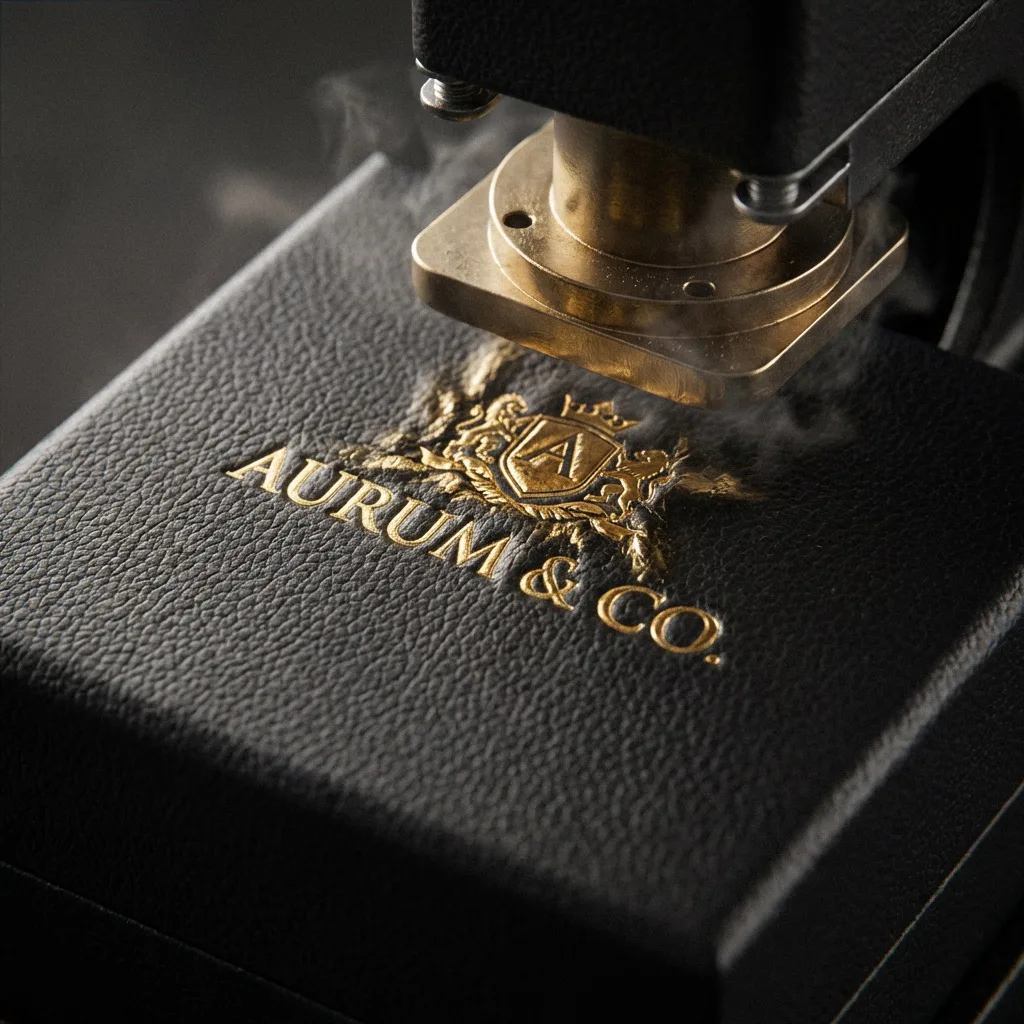
Inspect finish position, edge definition, coverage, pinholes, filling of fine detail, cracking, unwanted transfer, gloss consistency, emboss relief, deboss depth, laminate adhesion, scuffing, fingerprints, and behavior around folds or wrapped corners. Review in more than one viewing angle.
8. Packing and handling
Rehearse the real packing sequence with the intended components and operators where possible. Check assembly order, protective films, tissue, loading force, closure, unit protection, inner pack, export carton, carton marks, count, and whether finished surfaces rub during packing or transport.
9. Project-specific checks
Identify tests or documents required by the product, market, material, claim, application, or distribution route. These may include label adhesion trials, condensation or abrasion exposure, packed-product handling, transport testing, material documentation, or certificate-scope verification. Do not infer compliance from the appearance of a sample.
10. Decision and action list
Record one clear status: approved, approved with listed production corrections, or revise and resubmit. Assign every correction to a file, dimension, material, tool, process, or packing instruction. Avoid vague notes such as “make it more premium” or “match better” when a measurable or physical reference can be named.
Approval record
Turn the accepted sample into production control.
The signed object is only one part of the reference. The production team also needs the files and written limits that explain it.
- Sample identityProject, SKU, sample type, revision, date, quantity route, and photographs of the approved item.
- Controlled filesApproved dieline, artwork, color and finish references, barcode data, tooling files, and version matrix.
- Measured requirementsCritical dimensions, fit points, material construction, pack count, and project-specific inspection criteria.
- Approved exceptionsEvery simulated feature, production correction, pending document, and condition that the sample does not represent.
- Change ruleWhich material, product, artwork, tool, process, route, or packing changes require a new review.
After approval
Keep first production aligned with the sample.
Approval should move into the purchase specification, production instructions, first-article check, in-process records, and final inspection. If bulk production introduces a different material lot, process, tool, factory route, or packing method, review whether the original sample still represents the result.
For high-risk finishes or constructions, define the first-production evidence before manufacturing begins. That can include photos, measured checkpoints, retained references, carton data, or an agreed inspection step.
Connect this checklist to the broader factory and quality workflow and the reverse schedule in the packaging logistics guide.
When sample build, courier, buyer review, revisions, production, inspection, and delivery all need dates, use the custom packaging lead-time planner to keep every handoff visible.
After the sample becomes the controlled reference, use the custom packaging quality inspection checklist to plan first-article, in-process, final, carton, nonconformance, reinspection, and shipment-release records.