Balance stiffness with controlled scoring
Board construction follows panel span, product load, wall height, fold geometry, insert support, and the force required to assemble the box without crushing an edge.

Flat-pack rigid presentation boxes
Treat corner locking, closure position, wrap movement, assembly labor, and packed cube as one system before approving the exterior artwork.
Format decision
A collapsible structure is not automatically the better rigid box. Compare the operational advantage against the extra interfaces and work it introduces.
Scroll horizontally to view all columns →
| Buying question | Collapsible rigid box | Set-up rigid box | Approval evidence |
|---|---|---|---|
| Inbound format | Arrives flat or partly collapsed and requires a defined assembly step. | Arrives in its finished shape and moves directly to product loading. | Supplier packing specification, export-carton data, and receiving plan. |
| Visual continuity | Fold interfaces, corner returns, and closure zones remain part of the visible design. | Wrapped walls can offer more continuous faces with fewer moving interfaces. | Finished sample viewed open, closed, flat, and fully assembled. |
| Packing work | Operators form walls, seat corners, activate closures, and verify squareness. | Operators normally place the insert or product and close the box. | Timed pack-out trial using the intended staff, bench, and work instructions. |
| Space planning | Can reduce empty-box volume, subject to flat footprint and protective packing. | Uses the full assembled volume through storage and inbound transport. | Side-by-side carton, pallet, warehouse, and route calculations. |
| Structural priority | Fold life, corner seating, closure registration, and wall stability need specific review. | Joint strength, wrap alignment, lid fit, and permanent squareness lead the review. | Product-loaded structural samples approved against the same use case. |
Use one comparison brief. Keep product, insert, artwork, destination, and quantity constant when comparing formats; otherwise the cube and pack-out comparison will not be meaningful.
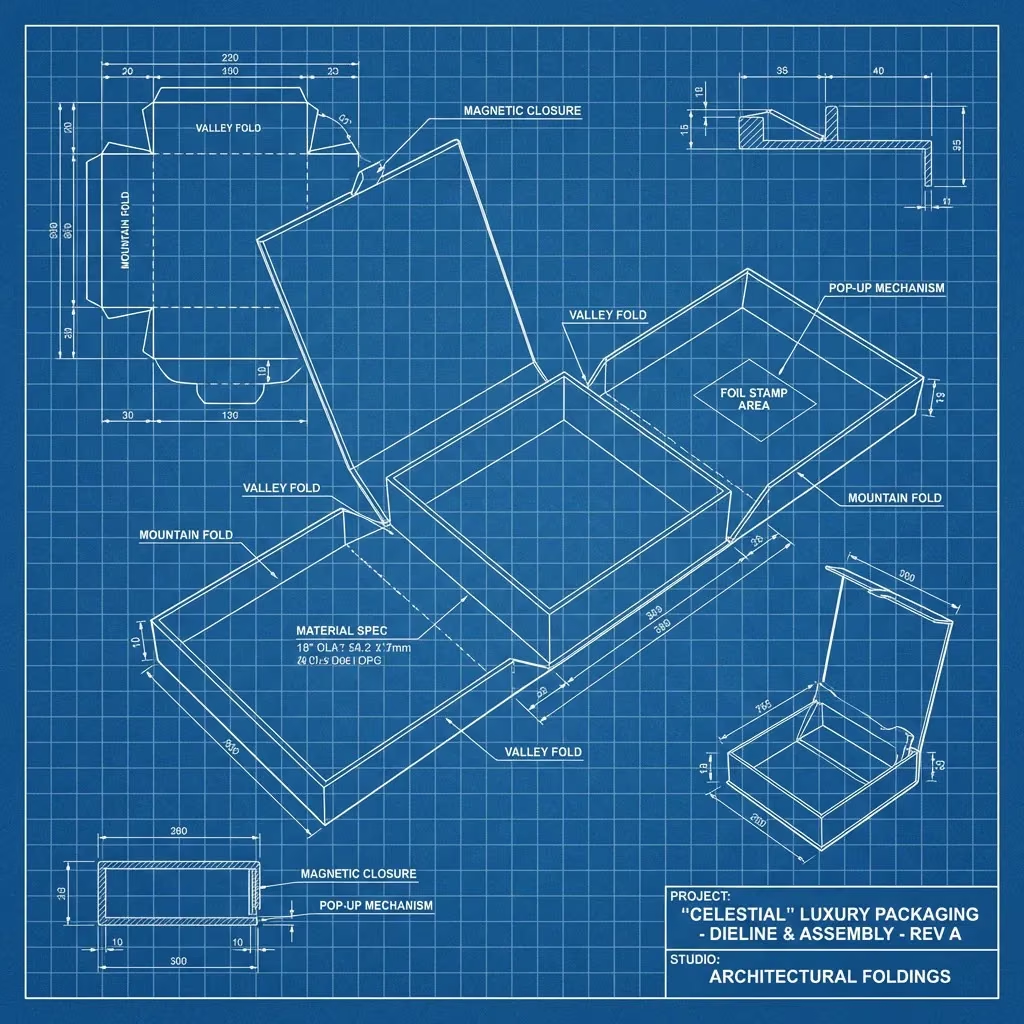
Corner, closure, assembly
A useful dieline identifies how each wall rises, what locates the corner, and what keeps the structure closed after the product is loaded.
Board and wrap system
A material that looks correct on a flat swatch can behave differently once it wraps an edge, crosses a hinge, or returns around a locking corner.
Board construction follows panel span, product load, wall height, fold geometry, insert support, and the force required to assemble the box without crushing an edge.
Paper grain, thickness, ink coverage, lamination, and corner relief influence cracking, bunching, edge exposure, and how cleanly the flat box opens into shape.
Magnets, tapes, liners, and reinforcement change local thickness. Their pockets and setbacks should be developed with the final board and wrap, not added after sampling.
Approve the moving sample. Review the chosen board, wrap, print, and finish on a working structure. A flat color proof cannot confirm fold appearance, closure alignment, or assembled squareness.
Fold-interface control
Fold interfaces deserve their own drawing notes because artwork, paper grain, relief cuts, adhesive, and operator force meet at the same locations.
Scroll horizontally to view all columns →
| Interface | What moves | Typical concern | Buyer check |
|---|---|---|---|
| Base-to-wall hinge | A full wall rotates from storage position into the assembled plane. | Wrap whitening, liner resistance, uneven score depth, or a wall that springs inward. | Open the finished sample in the stated assembly order and inspect both faces. |
| Corner return | Wrapped edges meet as two walls seat and lock. | Paper bunching, exposed board, excess gap, or accumulated thickness that pushes the corner out. | Compare all corners for seating, appearance, and contact with the insert. |
| Closure flap | A flap folds over the assembled wall and activates the selected closure. | Misregistered magnets, difficult liner removal, weak contact, or visible hardware impression. | Close the product-loaded box and inspect alignment, release, and reopening access. |
| Decorated fold | Printed, laminated, foiled, or embossed material bends across a stressed line. | Cracking, delamination, distorted artwork, or finish damage at the crease. | Agree artwork setbacks or approve the exact decoration on a functional sample. |
Sample assembly
The sample review should reproduce the receiving and packing sequence, not begin with a box that someone else has already assembled.

Pack-out, storage, freight cube
Flat-pack value depends on how the boxes are protected, counted, stored, assembled, and moved—not on the unassembled thickness alone.
Record the flat footprint, protective interleaving, units per export carton, gross carton weight, labels, and any loose liners or inserts.
Compare carton dimensions with doors, shelves, pallet footprints, stack limits, and the space reserved beside the packing line.
Define who forms the box, where waste liners go, how assembled units queue, and how the approved sequence is taught and checked.
Compare flat and set-up alternatives using export cartons, pallets if required, route, handling, destination charges, and packing labor.
Request supplier packing data before choosing. Freight-cube comparisons should use quoted carton dimensions and counts for the finished specification. Concept dimensions are not a shipping estimate.
Use the collapsible-versus-setup packed-cube and assembly calculator

Procurement handoff
A change to the wall, closure, insert, or wrap can change flat thickness, carton count, assembly sequence, and packed product dimensions.
Collapsible rigid box FAQ
Use these answers to frame the format, material, assembly, and logistics discussion with your sourcing team.
Quote a collapsible rigid box
Send your product, presentation goal, packing location, storage constraints, and destination. Kevin will return the structural questions needed to compare a collapsible format responsibly.