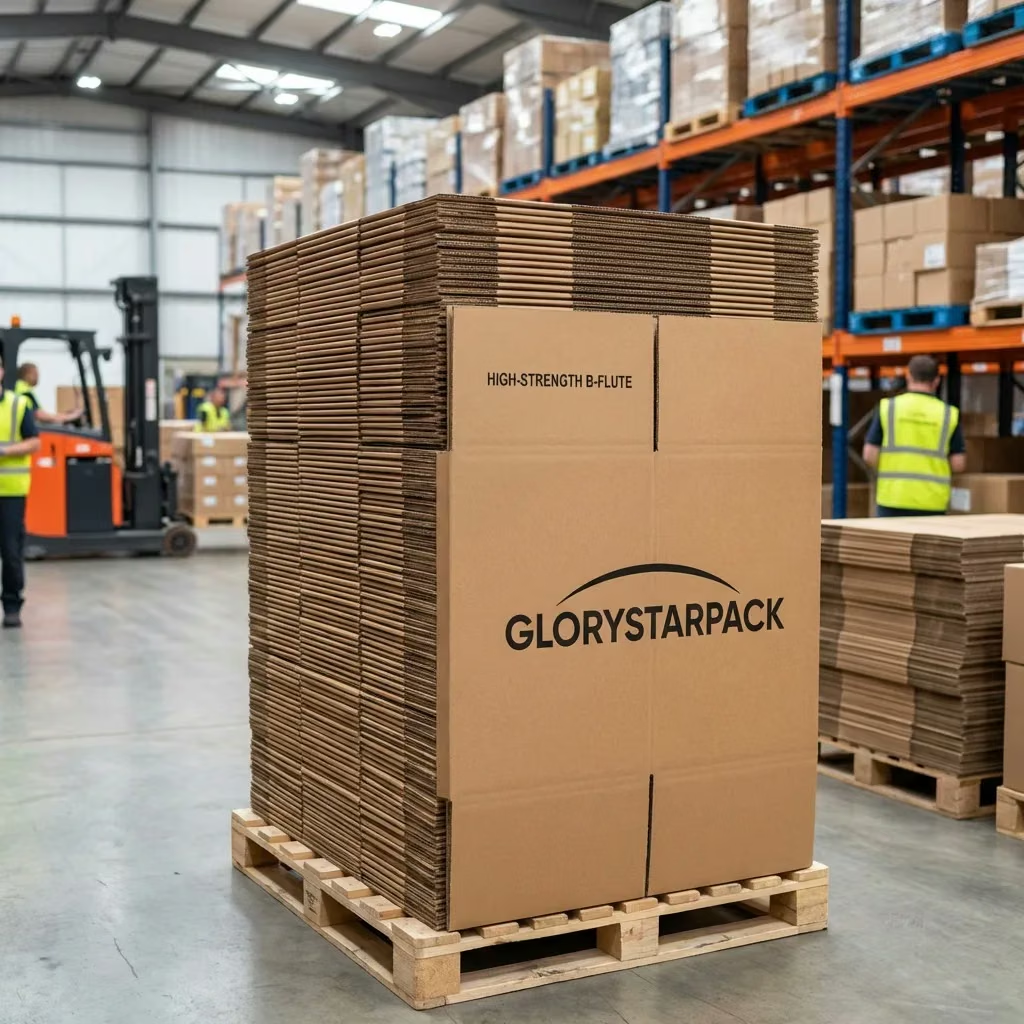
Short answer
A collapsible box saves empty-box cube; a setup box removes the forming step.
A collapsible rigid box can place more empty packs into a master carton and use less warehouse space before filling. A setup box arrives permanently formed, keeps its geometry without an assembly interface, and moves directly to product loading. Neither route is automatically cheaper or better.
The useful comparison holds the product, internal size, board, wrap, insert, finishing, quantity, inspection, and delivery basis constant. It then measures what changes: export-carton count, total cube, assembly labor, loose components, packing-line space, structural behavior, and appearance at the folds and corners.
Do not multiply the finished box dimensions by the order quantity. Empty boxes nest, stack, interleave, or ship flat in different ways. Ask for external master-carton dimensions and units per carton for each finished specification.
Free comparison tool
Packed-cube and assembly calculator.
Enter the supplier's quoted master-carton data for both routes. Add measured assembly time and your internal labor rate. An optional cube rate can create a planning scenario, but it is not a freight quotation.
Use one unit system. The default fields use millimetres and calculate cubic metres. For money, use the same currency for the optional cube rate and labor rate.
Voice of the buyer
Reddit keeps returning to space, shipping, and pack-out work.
The community discussions below are useful problem signals, not engineering data or universal cost evidence. They show why a format decision should connect inventory, warehouse space, shipment cube, and labor.
- Inventory can become physical clutterA limited-run brand is willing to pay more per unit to avoid holding hundreds of unused boxes. That is a storage and inventory-window problem before it is a print-price problem. Read the discussion.
- Right-sizing changes more than materialAn ecommerce operator weighs box sizes against shipping cost, storage, and fulfillment time. The same discipline applies to empty premium boxes moving into a packing site. Read the discussion.
- Extra forming steps accumulateA discussion about adjustable cartons highlights the tradeoff between fewer stored sizes and additional cutting or folding work. For collapsible rigid boxes, measure the complete forming sequence rather than calling assembly “quick.” Read the discussion.
- Freight can outweigh a unit-price winBuyers repeatedly report that getting custom boxes to the warehouse can change the sourcing decision. Keep the comparison tied to the real destination and delivery basis. Compare China and local routes.
Side-by-side scope
Compare the same product job in two operating states.
A flat pack and a setup box can look similar after filling, but they reach that point through different production, shipping, storage, and pack-out routes.
Scroll horizontally to view all columns →
| Decision area | Collapsible rigid box | Setup rigid box | Evidence to request |
|---|---|---|---|
| Delivery state | Flat or partly collapsed, with forming and corner fixing at pack-out. | Permanently formed and ready to receive the product. | Finished samples, packing photographs, export-carton specification. |
| Inbound cube | Often lower because empty structures are packed flat, subject to footprint, protection, and loose parts. | Usually higher because the finished shape occupies three-dimensional space. | Carton L × W × H, units, gross weight, pallet quantity, total cartons. |
| Warehouse work | Less pre-assembly volume but needs a forming station, liner-waste control, and a queue for assembled boxes. | More storage volume but simpler movement from carton to fill position. | Receiving trial, shelf or pallet fit, work-in-process limit. |
| Labor | Opening, squaring, fixing, checking, and possibly installing a loose insert. | No box-forming step, although lid, insert, wrap, and product loading still take time. | Timed batch at the intended bench with the intended operators. |
| Appearance | Fold interfaces, corner systems, release-liner access, and wrap movement must be approved. | Can maintain uninterrupted wrapped corners and fixed geometry. | Signed sample under the lighting and handling conditions that matter. |
| Insert route | Loose or separately packed inserts may preserve flat delivery but add handling. | Inserts may arrive already fitted when the specification and transport plan support it. | Insert packing method, installation step, fit and removal test. |
| Loaded performance | Depends on correctly seated corners, closure alignment, board span, insert, and secondary shipper. | Fixed walls can simplify repeatable geometry, but protection still depends on the complete pack. | Packed-product test with representative weight, accessories, and outer protection. |
| Cost basis | Manufacturing, loose parts, protection, freight, storage, forming labor, waste, and inspection. | Manufacturing, export space, freight, storage, handling, and inspection. | Comparable usable landed cost and one stated Incoterm plus named place. |
Read the result correctly
Cube saved is not the same as money saved.
The calculator deliberately separates physical cube from a freight bill. Several checks still sit between the two.
- Whole cartonsThe calculator rounds up. A partially filled last carton may still occupy a full carton position, and the supplier may choose a different final packing arrangement.
- Chargeable basisAir, parcel, courier, LCL, FCL, and local delivery do not price space in the same way. Weight, minimums, palletization, route, and contracted rates can change the result.
- Container utilizationA lower theoretical cube does not guarantee that a shipment uses fewer containers or pallets. Footprint, stack height, weight distribution, and loadability matter.
- Destination workUnloading, receiving, internal moves, storage, release-liner disposal, forming, checking, and insert installation belong in the operating comparison.
- Quality lossesIf corners are not seated consistently or stressed folds mark the wrap, rework and rejects can consume the apparent saving. Use a representative assembly trial.
- Unit-price differenceThe planning balance does not include the difference in box manufacturing price. Add both usable landed unit costs before approving a format.
Assembly trial
Time a batch, not a demonstration.
One prepared sample assembled by the designer is not a warehouse time study. Give the intended operators a representative batch, the proposed instructions, the real bench space, and the same loose components that production will deliver.
- Start the clock before opening the flat pack and stop when the checked box reaches the fill position
- Include liner removal, corner fixing, insert placement, waste handling, and correction of misaligned units
- Record total elapsed time, accepted units, rework, rejects, and operator comments
- Check first-unit learning separately from the stable batch average
- Repeat after a break to see whether the sequence remains obvious and consistent

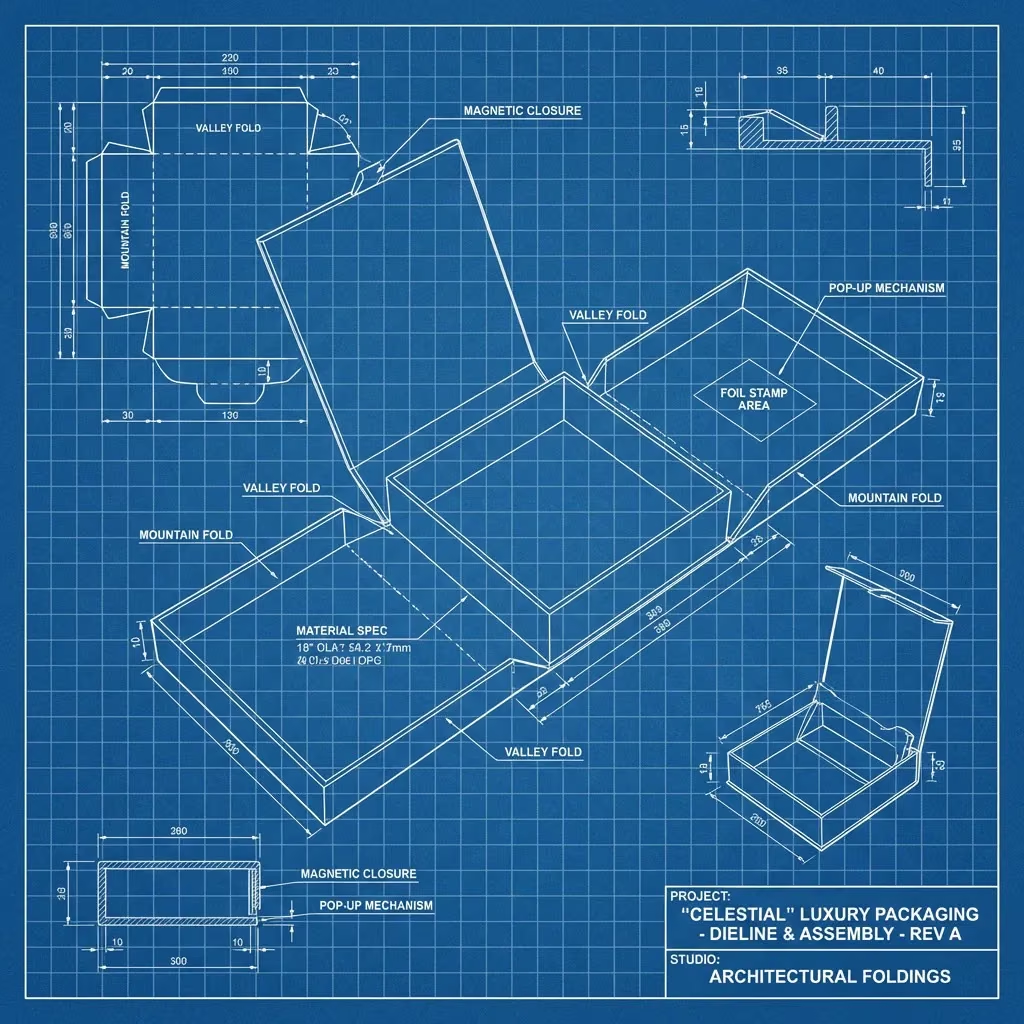
Structural sample
Approve the interfaces that make the flat box rigid.
The logistics case has no value if the assembled box is difficult to square, marks at the folds, changes the intended reveal, or cannot hold the loaded product consistently.
- Fold order, hand force, access to release liners, and corner seating
- Wall squareness, base flatness, hinge movement, magnet or closure alignment
- Wrap relief, grain direction, lamination behavior, print cracking, foil and embossing clearance
- Insert location, product retention, removal, lid clearance, and accessory movement
- Repeated open-close handling plus the intended secondary shipping pack and transit trial
Decision gates
Choose collapsible only when the operational saving survives the quality test.
Choose setup when removing the destination work and preserving fixed geometry is more valuable than reducing empty-box cube.
Space is the measured constraint
Quoted carton and pallet data show a material cube reduction, the packing site can absorb the forming step, and the assembled sample meets the appearance and loaded-performance requirement.
Ready-to-fill consistency matters more
The line needs immediate loading, the box uses tight fitted components, the product load challenges the corner system, or uninterrupted wrapped geometry is central to the presentation.
The comparison is still theoretical
One route lacks a finished sample, export-carton data, timed assembly trial, complete landed quotation, or representative loaded test. Ask for missing evidence before selecting.
Comparable RFQ
Ask both routes to return the same decision data.
A unit price without packing, assembly, and delivery data cannot answer the format question.
Scroll horizontally to view all columns →
| Input | What to state | What the supplier should return |
|---|---|---|
| Product and load | Product L × W × H, weight, accessories, orientation, fragile surfaces, removal path. | Proposed internal size, clearances, retention route, load concerns. |
| Controlled specification | Structure, board, wrap, print, finish, insert, artwork version, quantity. | Separate drawings and descriptions for collapsible and setup alternatives. |
| Assembly | Assembly location, operator skill, bench constraints, daily pack volume. | Step sequence, loose parts, liner waste, tools, training notes, sample batch. |
| Export packing | Destination, receiving limits, pallet or loose-carton requirement. | Master-carton external size, units, gross weight, total cartons, pallet data and protection. |
| Quality and testing | Appearance, tolerances, handling, loaded-product and transit requirements. | Sample route, inspection points, test plan, defect definitions, approval record. |
| Commercial scope | Named Incoterm and place, target date, expected repeat pattern. | Tooling, samples, unit price, packing, inspection, freight scope, exclusions and validity. |
Collapsible vs setup rigid box FAQ
Questions buyers ask before choosing the format.
These answers define the evidence boundary for the calculator, sample, warehouse trial, and quotation.