Design to controlled maximums
Use production-equivalent units or maximum dimensions, including decoration and closure tolerances. Fit should restrain movement without scraping labels, print, or coatings.

Secondary paper packaging only
We engineer cartons, rigid paper boxes, inserts, and labels around your filled bottle, jar, tube, cap, or pump. We do not manufacture primary cosmetic containers or formulas.
A clear production boundary
Our scope starts after the bottle, jar, tube, compact, or dispenser has been selected. We translate its dimensions, tolerances, filled weight, decoration, closure, and retail requirements into secondary paper packaging.
Outside our scope: bottles, jars, tubes, pumps, caps, formulas, filling, and primary product-contact packaging. The brand remains responsible for formula, container, label-copy, and market compliance approval.
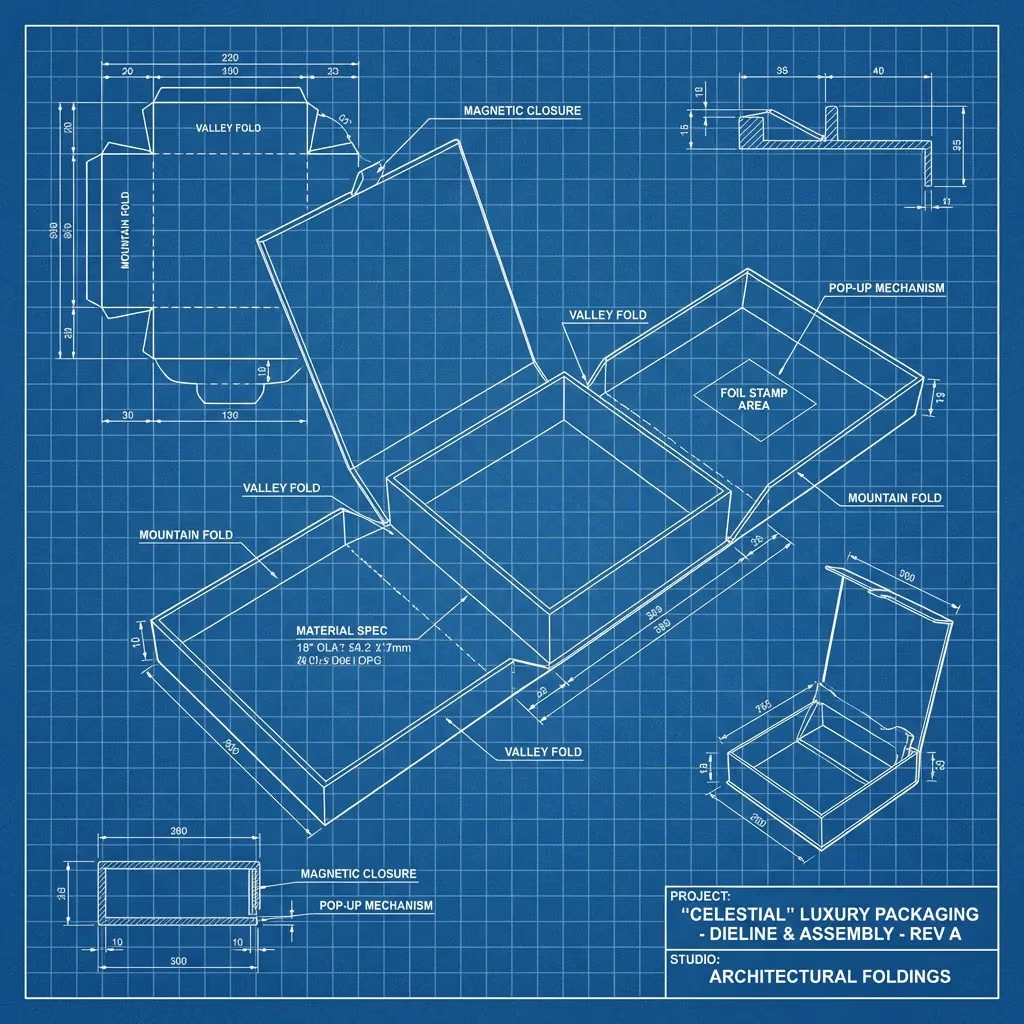
Container-led engineering
A bottle can fit the base dimensions and still fail at the pump, cap, shoulder, label edge, or decorated surface. The pack-out must consider the whole filled unit.
Use production-equivalent units or maximum dimensions, including decoration and closure tolerances. Fit should restrain movement without scraping labels, print, or coatings.
Support the container body or shoulder and preserve headspace around the pump, cap, collar, and locking clip so compression does not trigger or damage the dispenser.
Paperboard, molded pulp, or foam each changes cavity precision, recovery, surface contact, presentation, assembly time, and end-of-life options.
Applied bottle-carton references. Compare the essential-oil carton range GS-6445340 and the tall perfume carton GS-1294765. Both show external proportions and print direction while keeping bottle fit, support, coating, copy, and compliance project-specific.
Fit input sheet
Nominal capacity is not enough. Packaging dimensions should come from the production container, its closure, its decoration, and the way it will be packed.
Scroll horizontally to view all columns →
| Input | What to provide | Why it changes the package |
|---|---|---|
| Container envelope | Maximum width, depth, and height, including decoration, seams, and label edges. | Sets cavity size, carton clearance, insert walls, and protection against rubbing. |
| Cap or pump | Actuator height, collar, overcap, locking clip, and any position that changes in use. | Defines headspace and where vertical or side loads may safely be carried. |
| Filled weight | Actual production weight and center of gravity, not the empty container alone. | Influences board stiffness, base support, insert choice, and orientation in transit. |
| Surface finish | Paint, print, foil, coating, label, frosted glass, or other contact-sensitive decoration. | Guides contact points, cavity tolerance, tissue or liner use, and rub-risk review. |
| Pack-out | Hand or line packing, opening direction, leaflet, accessories, batch code, and tamper label. | Changes assembly order, glue areas, insert access, and the space available for required copy. |
Handling and surface choice
Matte, soft-touch, uncoated, film-laminated, and varnished surfaces behave differently during filling, packing, retail handling, and transport. The best finish is the one that still looks intentional after real contact.
Box and label coordination
Boxboard and label stock do not reflect ink in the same way. A coated carton, uncoated paper label, white film, and clear film can all shift the same digital color differently.
Review perfume bottle box engineering · Compare clear labels for bottles
Sample to production
The structure is approved with the real pack first. Printed components follow once the container, insert, and opening sequence are stable.
Production-equivalent units, dimensions, weight, closure details, quantity, artwork, and destination.
Check cavity, pump clearance, support points, removal, leaflet space, and pack-out sequence.
Review both substrates together for copy, barcode, color, finish, folds, label shape, and application.
Inspect dimensions, creases, glue, insert placement, print, finish, label cutting, count, and packing.
Cosmetic packaging FAQ
Questions buyers should resolve across the primary container, secondary box, insert, label, and packing operation.
Buyer evidence pack
A logo on a website is not enough. For a material, compliance, or quality requirement, request the current document and verify that its scope applies to your order.
Company identity. GloryStarPack is operated by Xiamen GloryStar Packaging Co., Ltd. in Xiamen, Fujian, China. This site covers custom boxes, bags, inserts, and labels. Visit our specialist glass bottle and container packaging site. View our Alibaba company profile.
Approved photos, dimensions, finish location, and revision notes.
Named substrate, board, adhesive, laminate, or requested certificate copy.
Agreed photos or video from printing, finishing, assembly, and inspection.
Carton count, marks, packing photos, gross dimensions, and delivery term.
Use the packaging sample approval checklist to record fit, color, finishing, pack-out, revisions, and the exact reference that will govern production.
For first production through shipment release, use the packaging quality inspection checklist and record planner to control lots, defects, carton data, corrective action, reinspection, and authority.
Quote secondary cosmetic packaging
Send container dimensions, weight, pump or cap details, quantity, box and label needs, destination, and any artwork. Kevin will reply with the next fit questions.