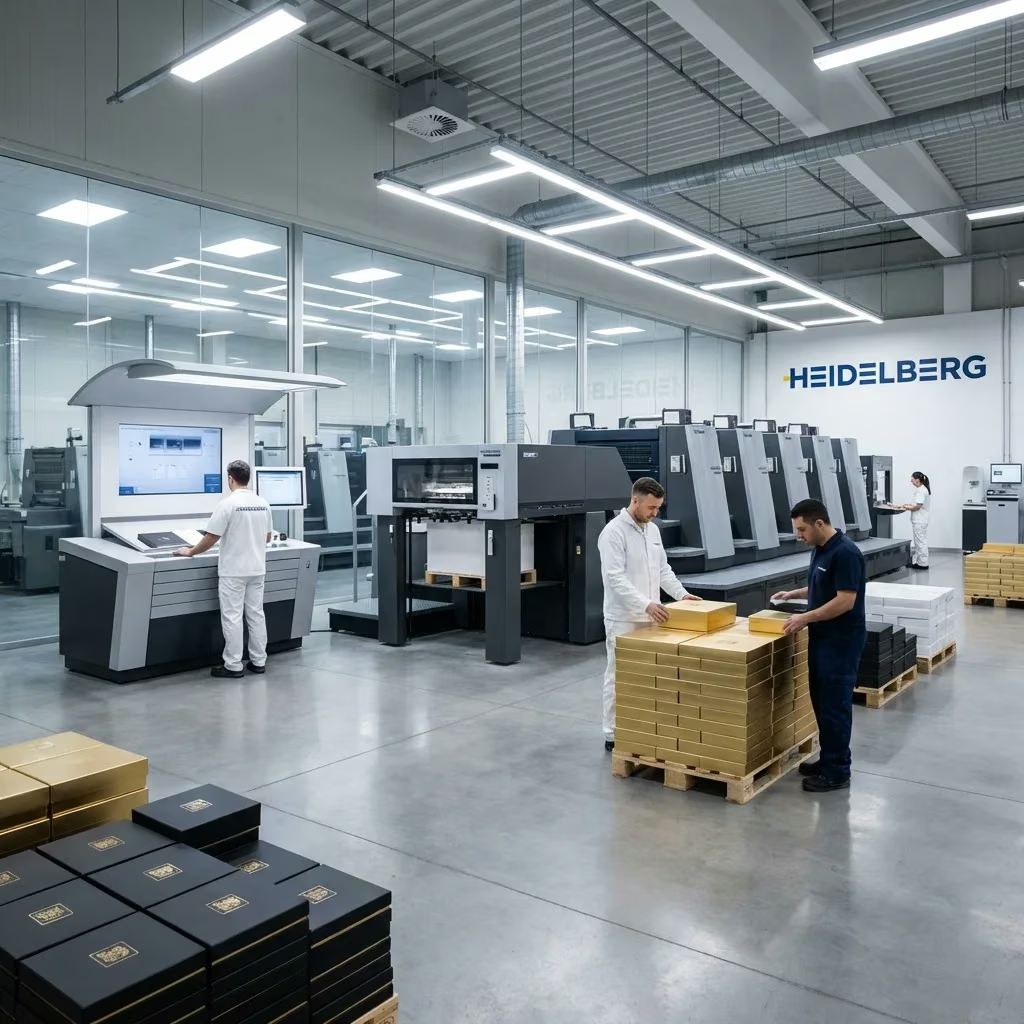
Short answer
Choose the production route that controls your biggest risk.
Neither China nor local sourcing is automatically cheaper, faster, safer, or higher quality. A nearby supplier may be ideal for a short launch, frequent changes, rapid replenishment, or hands-on sampling. A China supplier may fit a stable repeat program, a construction that needs specialized equipment, coordinated boxes and labels, or a quantity that can absorb setup and international freight.
The useful comparison begins only after both suppliers quote the same package. Freeze the product load, finished dimensions, structure, materials, print, finishing, insert, versions, quantity, quality evidence, packing, delivery date, and named delivery scope. Then compare the cost and risk that remain with the buyer.
Country is not a specification. A marketplace listing, distributor, broker, converter, printer, and integrated packaging factory can all offer different capabilities. Verify who will make each component, who owns the tooling, and who is accountable for the finished pack.
Compare local and overseas routes with the same dated lead-time stages
What buyers keep asking
Reddit discussions expose the real comparison.
The repeated question is not simply “which country is cheaper?” Buyers are trying to balance variety, MOQ, proof, payment, customs, delivery, quality consistency, and confidence in the next order.
- Local or Alibaba?A 2026 small-business discussion compares international choice and lower advertised prices with local turnaround, communication, and import uncertainty. Read the discussion.
- Reorder after customs delayA skincare brand reported an acceptable first custom-box result but questioned whether freight and customs complexity justified staying with the same overseas route. Read the experience.
- Payment before proofA recent packaging thread asks what should be approved before paying for a first custom order and shows how widely supplier sample and deposit processes can vary. Read the discussion.
- Quality verificationEcommerce buyers repeatedly recommend clear specifications, representative samples, production checks, and destination-aware shipping rather than trusting the lowest marketplace quote. Review the sourcing thread.
Community posts reveal buyer language and failure modes; they do not establish universal prices, payment rules, legal duties, or supplier performance. Verify the actual order, destination, and contract.
Route comparison
Match the source to the operating condition.
These are decision prompts, not guarantees. Capability and service vary within every market.
Scroll horizontally to view all columns →
| Decision | Local route may fit when | China route may fit when | Evidence to request |
|---|---|---|---|
| Launch quantity | Small runs, frequent artwork changes, or nearby stock formats reduce initial exposure. | Stable volume supports setup, conversion, assembly, export packing, and freight. | Quantity by version, setup charges, overrun rule, repeat forecast, and next price break. |
| Structure | A standard local dieline or available machine route already suits the product. | A specialized rigid, insert, finish, or coordinated component route is available. | Comparable samples, equipment/process explanation, dieline, material build, and exclusions. |
| Development | In-person fit review or rapid physical iterations are important. | The schedule allows international samples and controlled remote approvals. | Sample type, materials, revision count, courier time, approval record, and production relationship. |
| Replenishment | Demand is volatile or emergency stock must arrive quickly. | Demand is forecastable and reorders can be released before safety stock is consumed. | Capacity assumptions, material lead time, production window, transit range, and reorder trigger. |
| Quality control | The buyer can visit or receive first articles quickly, but still needs written criteria. | The buyer has a documented sample, production checkpoint, final inspection, and remedy plan. | Critical dimensions, defect categories, sampling method, photos, retained samples, and release authority. |
| Delivery scope | A delivered domestic price removes or simplifies import coordination. | The landed route is defined and the buyer can manage freight, customs, tax, and receiving responsibilities. | Incoterm, named place, carton data, freight validity, importer role, charges, and delivery exclusions. |
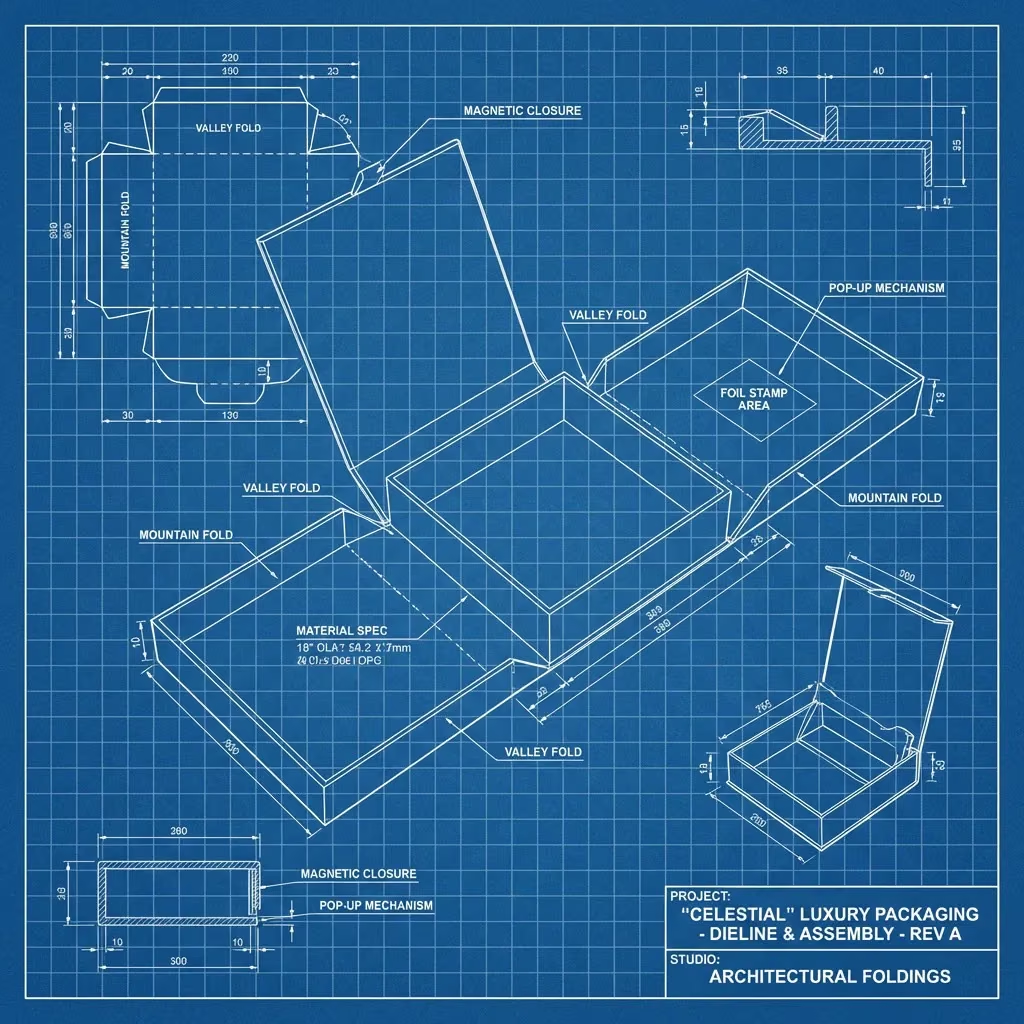
One frozen RFQ
Remove geography from the first technical comparison.
If two suppliers quote different constructions, material grades, inserts, print routes, packing, or delivery points, the lower number does not prove better value. Issue one controlled brief and make every alternative visible.
- State whether dimensions are internal or external and identify the loaded orientation
- Describe the full material construction rather than using only “premium” or “eco-friendly”
- Separate each artwork, color, language, size, and SKU quantity
- Show print layers, foil, emboss, coating, white ink, cut, crease, glue, and safe zones
- Define the insert, accessories, protective parts, unit packing, export carton, and pallet
- Request the same sample, quality, delivery, payment, and quotation-validity scope
Use the custom packaging cost and MOQ guide to normalize setup, quantity, versions, and packing before comparing unit prices.
Sample ladder
Approve evidence in the order the decisions are made.
A rendering can communicate appearance, but it cannot prove loaded fit, material, finishing, production consistency, export packing, or transit performance.
Capability sample
Inspect a comparable construction and finish. Record which parts differ from the proposed order.
White sample
Confirm dimensions, folds, opening, closure, insert, product fit, removal, and packing steps.
Production-intent sample
Review representative materials, artwork, color reference, finishing, assembly, and limitations.
First article + bulk
Check production output against the signed specification before final inspection and shipment release.
Record the approved revision with the packaging sample approval checklist; do not rely on chat history or an unmarked sample.
Quality control
Convert “good quality” into observable decisions.
A supplier badge, factory video, customer review, or location can support due diligence but cannot replace order-specific acceptance criteria. Define what must be checked before the factory buys material, during production, at assembly, and before shipment.
- Critical dimensions, tolerances, product fit, closure, friction, and opening behavior
- Named board, paper, film, adhesive, insert, coating, finish, and approved substitutes
- Artwork revision, copy, barcode, color reference, print position, foil, emboss, and register
- Workmanship defects, contamination, scratches, glue, warping, cracking, alignment, and odor
- Quantity, mixed-SKU control, protective packing, carton strength, marks, weight, and pallet data
- Inspection timing, sample selection, authority to hold shipment, correction, remake, and claim evidence
The GloryStarPack quality-control workflow shows how project records connect preflight, first article, assembly, and final packing.
Landed comparison
Compare the cost that reaches your warehouse.
The quoted unit price is only one line. Use the same destination, delivery requirement, inventory window, and expected usable quantity.
Scroll horizontally to view all columns →
| Layer | Include | Control question |
|---|---|---|
| Development | Engineering, dieline, artwork adjustment, tooling, proofs, samples, courier, and revisions. | Which charges repeat if the size, artwork, material, or supplier changes? |
| Production | Packaging units, versions, accessories, assembly, waste, inspection, unit protection, and export packing. | How many conforming, usable units should arrive for each SKU? |
| Transport | Pickup, origin charges, freight, insurance, destination handling, local delivery, and peak or accessorial charges. | Which amounts are firm, estimated, excluded, or payable to another party? |
| Import | Classification review, duty, tax, entry, broker, bond, documentation, and other destination requirements where applicable. | Who is importer of record and who remains legally responsible? |
| Operational | Receiving, storage, assembly, decorating, packing labor, safety stock, defects, damage, delay, and obsolete inventory. | What will the route cost per usable customer order over the expected usage period? |
Use the EXW, FOB, CIF, and DDP comparison to define delivery responsibility. Import duties, taxes, classifications, and procedures depend on the destination and current rules; obtain qualified customs or legal advice for the actual shipment.
Supplier due diligence
Verify the company, capability, order, and remedy separately.
No badge or directory entry proves that a future production run will match an unstated expectation.
Confirm who is contracting
Match the legal name, address, payment recipient, business record, contact details, and platform account. Clarify factory, converter, trader, or distributor roles.
Verify the actual route
Request comparable work, material and process details, sample evidence, outsourced steps, capacity assumptions, and permission before relying on certificates or claims.
Write the specification
Put the controlled files, sample, quantity, timeline, packing, inspection, delivery term, payment milestones, change process, and acceptance criteria in the order.
Platform protection follows the written order. Alibaba states that its Trade Assurance protection is based on the online order and agreed quality and ship-date terms. This does not replace a precise specification, prompt inspection, destination compliance, or professional advice.
When certified paper or board is part of the brief, use the FSC packaging supplier verification workflow to check the direct supplier, site and scope, order-level claim, label approval, and delivery records.
Hybrid sourcing
One brand can use two controlled routes.
A local-versus-overseas choice does not always need one permanent winner.
Local or stock-size pilot
Validate product fit, artwork, customer response, packing labor, and demand without committing to a long inventory horizon.
Stable overseas repeat
Move a frozen construction to the route that supports repeat quantity, capability, landed cost, and planned lead time.
Emergency local route
Maintain an approved simpler format or brand-component system for unexpected demand or delayed replenishment.
Shared master evidence
Keep compatible dimensions, product fit, artwork, color references, version records, and clear source identification.
For uncertain demand, the low-MOQ packaging guide explains when to use stock packs, branded components, stock-size print, modular parts, and full customization.
RFQ checklist
Request a factory quote that can be compared with a local delivered offer.
- product maximum dimensions, loaded weight, orientation, fragility, sensitive surfaces, accessories, and representative samples;
- package format, internal or external dimensions, opening sequence, closure, insert, materials, performance need, and approved alternatives;
- artwork, dieline status, print coverage, colors, physical targets, finishing, copy, barcode, and quantity for every version;
- sample stages, tooling, ownership, tolerances, critical checks, inspection, remedy, overrun, and retained-reference requirements;
- unit protection, units per carton, carton dimensions and weight, marks, pallet requirements, and mixed-SKU rules;
- first quantity, repeat forecast, target warehouse date, destination, Incoterm and named place, freight, insurance, import assumptions, exclusions, and quotation validity.
Send GloryStarPack the product data, reference pack, quantity by version, destination, required date, and the local quotation scope you want to compare. We can identify open technical and delivery assumptions before providing a China production route.
Primary guidance
Use community signals to find questions and official sources to set boundaries.
Rules and platform protections change. Check the current source for the actual destination and transaction.
- International due diligenceThe U.S. International Trade Administration recommends investigating markets and carefully selecting foreign partners; its services can support company background checks. Review the official guidance.
- Import responsibilityU.S. Customs and Border Protection states that importers remain ultimately responsible for knowing and meeting applicable requirements, even when using a customs broker. Other destinations have their own rules. Read the U.S. guidance.
- Platform order protectionAlibaba explains that Trade Assurance protection is based on the online order, agreed quality and ship-date terms, and payment through the platform. Review the current terms.
- Delivery responsibilityICC Incoterms® 2020 allocates defined tasks, costs, and risks between seller and buyer but does not replace a full sales contract or destination compliance review. Review the official overview.
China vs local packaging FAQ
Questions to settle before selecting the route.
Use the answers to normalize quotations and identify the evidence still needed for the actual order.