Reserve readable shipping zones
Place case codes, handling symbols, barcodes, destination labels, and compliance text away from joints, tape paths, hand holes, scores, and pallet abrasion areas.
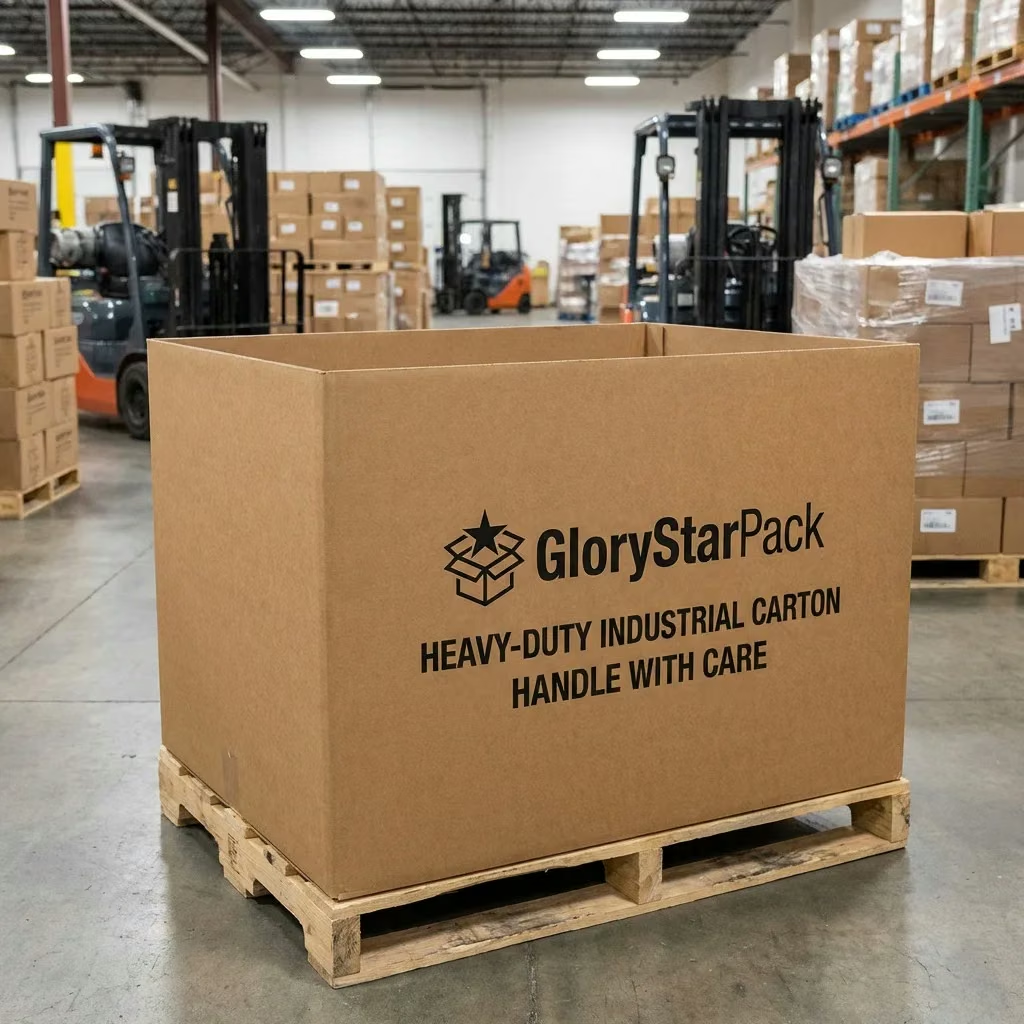
Transit and warehouse packaging
Define the case style, inner pack, board construction, closure, route, and pallet pattern together—before treating print as the primary specification.
RSC versus mailer
A regular slotted container and a die-cut mailer create different material flows, closure steps, pallet behavior, opening experiences, and tooling decisions.
Scroll horizontally to view all columns →
| Decision | RSC shipping case | Die-cut mailer | Procurement check |
|---|---|---|---|
| Primary role | Commonly evaluated as a shipping case, master carton, warehouse case, or grouped-product container. | Commonly evaluated for direct parcel delivery where opening structure and presentation share priority. | State whether the box is the consumer pack, an outer shipper, or both. |
| Case forming | Slotted panels form a rectangular case with top and bottom flaps brought together for closure. | Shaped panels fold into locks, roll ends, dust flaps, or tuck features defined by a die-cut pattern. | Trial the proposed format on the real packing bench or case-forming equipment. |
| Closure | Tape, glue, or staples may be considered according to load, route, surface, equipment, and opening needs. | Mechanical locks may form the case, while seals or tape can still be required for transit security. | Document both case-forming and final-sealing instructions. |
| Cube and pallet fit | Rectangular geometry can be planned around unit count, pallet pattern, stacking, and warehouse handling. | Locks, rolled edges, and mailer proportions can change outside dimensions and pallet efficiency. | Calculate with final outside dimensions, not the product cavity alone. |
| Print role | Handling marks, case identification, barcodes, destination data, and brand graphics can share the panels. | Exterior and interior graphics may support both delivery information and the opening experience. | Map labels, tape, scores, joints, and abrasion zones before artwork approval. |
Do not substitute styles by name alone. Ask for the case code or structural drawing, closure method, dimension convention, and filled sample so competing quotes describe the same pack.
Build a supplier-ready case specification with the free cube and pallet planning tool
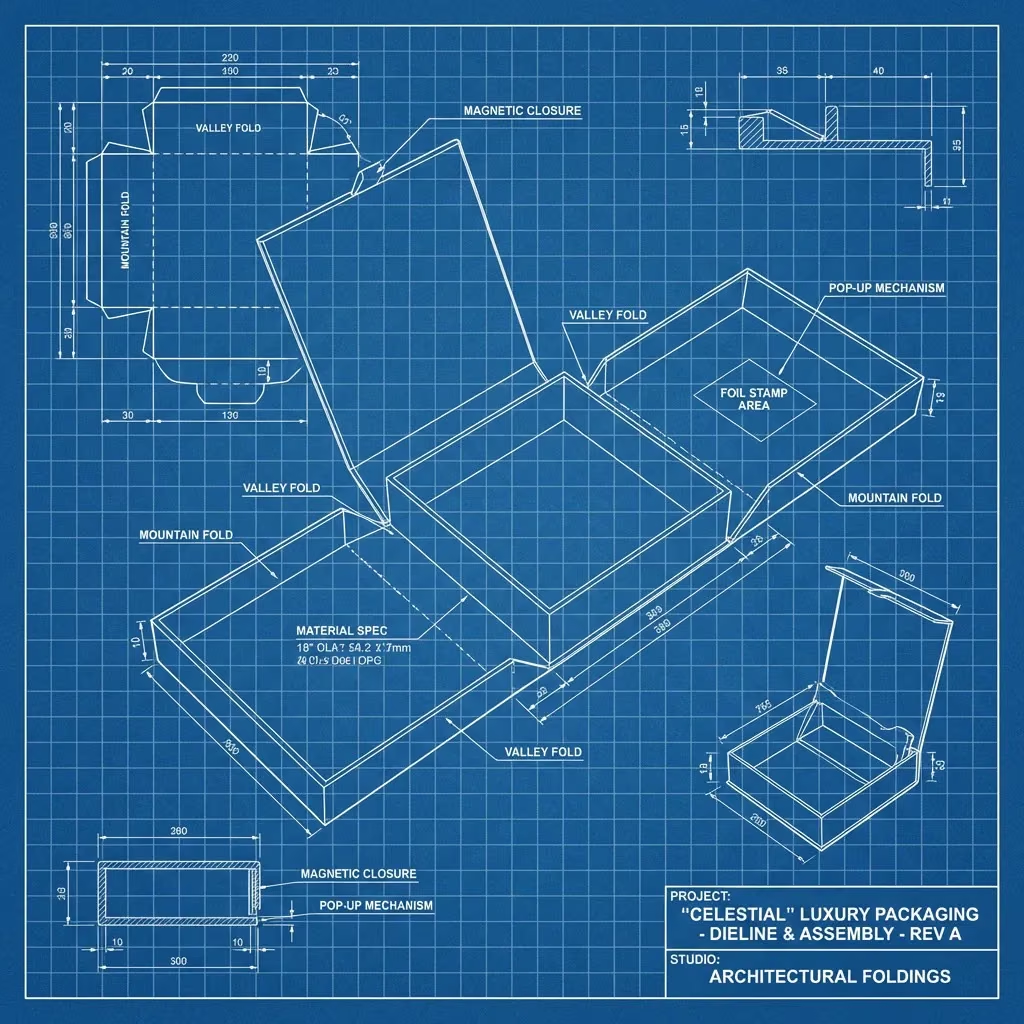
Dimension chain
Inside and outside dimensions answer different questions. The drawing should identify which is being quoted, the order of dimensions, the unit, and the packed orientation.
Project-specific flute and board
Flute profile, liner combination, wall construction, recycled content, coatings, and manufacturing direction interact. Final selection belongs to the actual case and route.
Scroll horizontally to view all columns →
| Input | Why it changes the brief | Data to provide | Approval check |
|---|---|---|---|
| Packed load | Weight distribution and unsupported spans can load panels differently even when total weight is equal. | Product count, total packed weight, center of mass, contact points, and orientation. | Filled sample inspected in its handling and stacking orientation. |
| Case geometry | Panel length, depth, hand holes, perforations, scores, and joints influence the structure. | Inside dimensions, case style, openings, closures, and any required access features. | Approved drawing plus dimensional sample using the intended board concept. |
| Stacking plan | Stack height, duration, alignment, pallet pattern, and load sharing define the compression exposure. | Cases per layer, layers, warehouse stacking, palletization, and storage duration. | Project test or engineering review based on the agreed distribution condition. |
| Climate and handling | Humidity, temperature changes, wet surfaces, abrasion, impacts, and vibration can alter performance needs. | Origin, destination, route, storage, shipment mode, season, and known handling hazards. | Conditioning and test brief matched to the relevant exposure. |
| Specification language | Buyers and markets may describe corrugated board using different grade, edge-crush, burst, or material conventions. | Customer specification, reporting convention, restricted substances, and documentation requirements. | Supplier specification and records reviewed against the buyer's stated requirement. |
Board callouts are project-limited. A construction approved for one size, load, route, or pallet pattern should not be assumed suitable after those conditions change.
Stacking, humidity, tape
Compression capacity is not just a board label. Case geometry, load alignment, score lines, pallet pattern, time, humidity, and closure quality affect how the shipping case carries a stack.
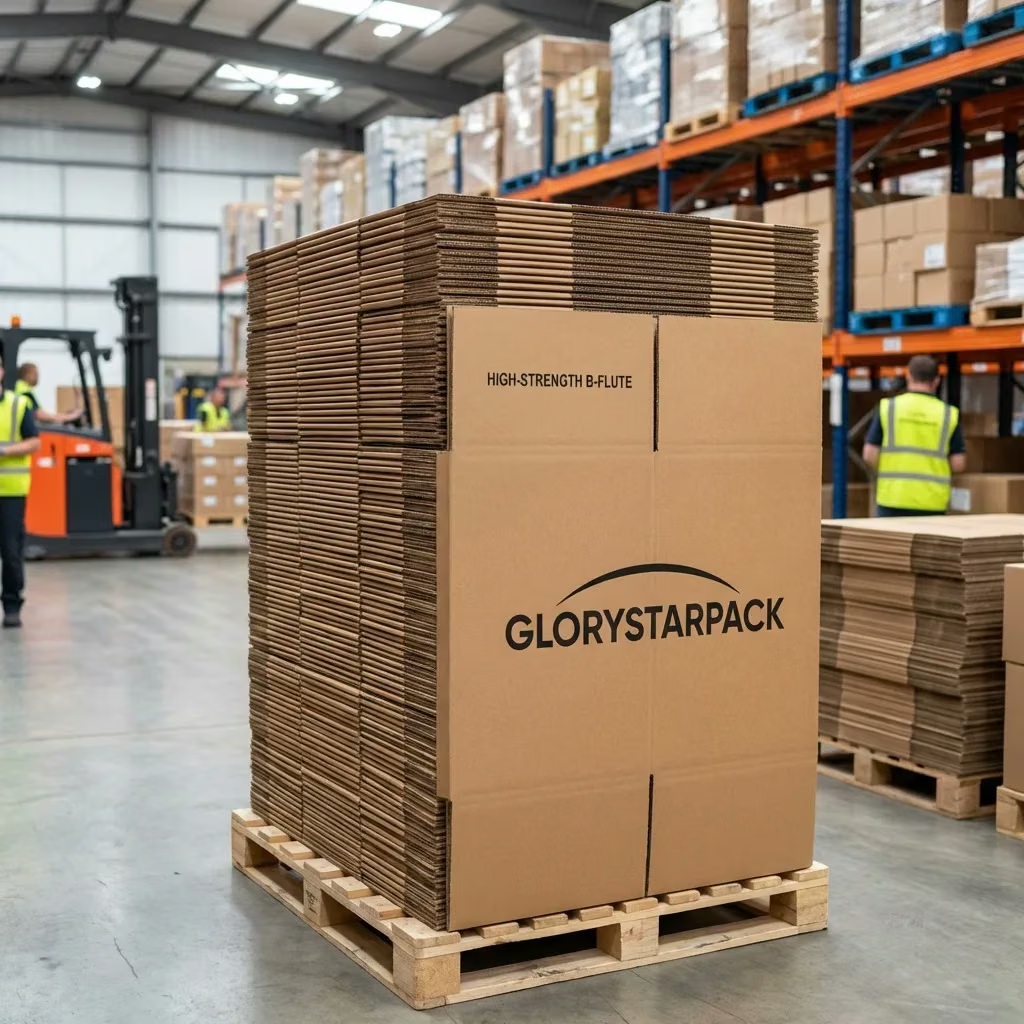
Flexographic versus digital print
Artwork detail, versions, quantity, liner color, rub exposure, handling marks, color control, and finishing all influence the useful print route.
Scroll horizontally to view all columns →
| Print route | Often evaluated for | Tradeoffs to quote | Proofing check |
|---|---|---|---|
| Flexographic | Repeat graphics, handling marks, barcodes, logos, spot-color systems, and direct printing on corrugated liners. | Plate setup, number of colors, screens, registration, small type, board absorption, and design revisions. | Approve the artwork separation and review representative print on the stated liner and board construction. |
| Digital | Detailed art, multiple versions, variable content, test campaigns, or jobs where plate setup is not preferred. | Quoted run economics, color consistency, available sheet size, ink coverage, coating, rub exposure, and converting compatibility. | Approve output on the intended liner, then inspect it after scoring, slotting, folding, taping, and handling. |
Place case codes, handling symbols, barcodes, destination labels, and compliance text away from joints, tape paths, hand holes, scores, and pallet abrasion areas.
Kraft, white, coated, and uncoated faces change contrast and color appearance. Define the substrate and an achievable reference before signing off color.
Graphics cross functional panels. Inspect registration and legibility after the case is cut, scored, folded, joined, filled, and closed.

Inner packaging
Partitions, pads, trays, sleeves, bags, cushioning, and void fill determine how loads reach the corrugated shell and whether products can move or contact each other.
Transit-test brief
The test method, sample conditioning, sequence, and acceptance criteria should come from the shipment mode and business risk—not from an unsupported pass/fail claim.
Record origin, destination, shipment mode, parcel or pallet handling, transfers, storage, climate, stacking, and known hazards.
Use the actual product or an agreed substitute, complete inner packaging, production-intent case, closure, labels, weight, and orientation.
Identify the chosen test protocol, conditioning, sample quantity, sequence, inspection points, product limits, and packaging acceptance criteria.
Record case dimensions, board specification, inner-pack revision, closure, print, test condition, observations, and any approved corrective change.
Agree authority before testing. The buyer, retailer, carrier, laboratory, or destination market may define different requirements. Confirm which party's method and acceptance criteria govern the project.
Plan internal fit, outside cube, pack-out, and parcel testing for an ecommerce mailer
Pallet pattern
A case that fits the product but wastes pallet area or overhangs the deck can create avoidable handling and stacking problems downstream.
Scroll horizontally to view all columns →
| Input | Decision it supports | What to document |
|---|---|---|
| Pallet and limits | Usable deck area, height, weight, forklift access, warehouse rack, and destination compatibility. | Pallet dimensions and type, maximum loaded height and weight, overhang rule, and any retailer or warehouse constraint. |
| Case outside size | Cases per layer, rotation, gaps, edge alignment, and use of the available footprint. | Production-intent outside dimensions, dimensional tolerance, bulge allowance, and loaded case weight. |
| Layer pattern | Column alignment, interlocking, load transfer, label visibility, and unit stability. | Cases per layer, orientation by layer, total layers, slip sheets, corner protection, and top treatment. |
| Unitization | Movement control during handling and transit without damaging cases or blocking required labels. | Stretch wrap, straps, edge boards, caps, label positions, ventilation, and unpacking requirements. |
Recalculate after dimensional change. A small case revision can change the layer count, orientation, stack height, and load path. Keep the pallet drawing tied to the approved box revision.
Production control
The purchasing file should connect the drawing, board callout, print, joint, closure, inner packaging, test brief, and pallet pattern to one revision.
Corrugated shipping box FAQ
Use these answers to align sourcing, warehouse, logistics, artwork, and test responsibilities.
Buyer evidence pack
A logo on a website is not enough. For a material, compliance, or quality requirement, request the current document and verify that its scope applies to your order.
Company identity. GloryStarPack is operated by Xiamen GloryStar Packaging Co., Ltd. in Xiamen, Fujian, China. This site covers custom boxes, bags, inserts, and labels. Visit our specialist glass bottle and container packaging site. View our Alibaba company profile.
Approved photos, dimensions, finish location, and revision notes.
Named substrate, board, adhesive, laminate, or requested certificate copy.
Agreed photos or video from printing, finishing, assembly, and inspection.
Carton count, marks, packing photos, gross dimensions, and delivery term.
Use the packaging sample approval checklist to record fit, color, finishing, pack-out, revisions, and the exact reference that will govern production.
For first production through shipment release, use the packaging quality inspection checklist and record planner to control lots, defects, carton data, corrective action, reinspection, and authority.
Quote a corrugated shipping box
Send the pack-out, shipment mode, warehouse and pallet constraints, destination, and artwork. Kevin will reply with the dimension, board, closure, print, and test questions needed for a comparable quote.
Still comparing delivery scope? Use the EXW, FOB, CIF, and DDP packaging guide to define the named place, freight, customs, and destination charges.