
Short answer
Custom packaging is worth it only when it solves a valuable, measured problem.
For a stable product with repeat demand, custom packaging may reduce movement, damage, void fill, packing steps, shipping cube, or presentation inconsistency. It may also support a premium retail or gifting experience. For an unproven product, the same packaging can tie up cash, occupy storage, and become obsolete after a product, artwork, barcode, or compliance change.
The honest decision is not “plain versus premium.” It is whether the incremental usable landed cost of the custom route can be recovered through enough additional contribution-producing orders or verified operational savings before the inventory becomes a liability.
Do not insert a hoped-for sales lift and call it ROI. First calculate the break-even threshold without any lift. Then run scenarios and test them against actual orders, returns, packing time, damage, reviews, and repeat purchase.
Free planning tool
Custom packaging break-even calculator.
Use landed costs for a fair comparison. The calculator estimates the additional orders required to recover the upgrade; it does not predict that packaging will create those orders.
Formula: incremental investment = quantity × (custom landed cost − baseline landed cost) + one-time costs. Break-even orders = incremental investment ÷ contribution margin per incremental order.
Voice of the buyer
Reddit asks about value—not just box price.
Across small-business discussions, the recurring concern is whether presentation justifies the cash, freight, and inventory commitment. Community comments are useful problem signals, not universal performance evidence.
- Affordable without looking cheapA founder asks how to keep packaging intentional when custom work and freight quickly raise costs. The tradeoff is perceived quality versus unit economics. Read the discussion.
- Do customers care?A long-running discussion separates product packaging from the shipping pack and shows that answers depend on audience, price point, fragility, and the job the packaging must perform. Read the discussion.
- Was a first custom run worth it?A skincare founder reports positive presentation feedback but also questions customs delays and whether to reorder or change sourcing routes. That is why repeatability and landed scope belong in the ROI decision. Read the discussion.
- Avoid the MOQ trapMany small brands can make stock packaging feel deliberate with a controlled label, tissue, card, sleeve, or insert before paying for a fully custom structure. Use the low-MOQ packaging route to stage that decision.
Complete comparison
Count more than the supplier’s unit price.
A low quoted unit price can still produce a poor decision if the run is too large, components arrive unusable, or packing and freight scope differ.
Scroll horizontally to view all columns →
| Cost or value area | Baseline route | Custom route | Evidence to record |
|---|---|---|---|
| Usable landed pack | All current boxes, fill, labels, cards, tape, and expected waste. | Every new component plus freight, duty, tax, inspection, and expected waste. | Total landed cost divided by accepted usable units. |
| One-time spend | Existing setup may already be paid. | Structural work, prototypes, dies, plates, molds, color proofs, and setup. | Separate reusable tooling from order-specific charges. |
| Packing labor | Time to assemble, fill, wrap, label, close, and correct errors. | Time the same tasks with the approved custom sample. | Average seconds per pack × loaded labor cost. |
| Protection and returns | Movement, scuffing, leakage, breakage, and return reasons. | Packed-product and transit test results under representative conditions. | Damage rate, replacement cost, reverse logistics, and service time. |
| Shipping and storage | Parcel dimensions, dimensional weight, fill volume, and space used. | Finished external size, master-carton data, pallet plan, and storage duration. | Carrier quotes and warehouse cube for both routes. |
| Inventory risk | Flexible stock packs may support several products. | Printed packs may be tied to one SKU, market, barcode, or campaign. | Months of cover, expiry of claims, redesign risk, and disposal plan. |
| Commercial response | Baseline conversion, reviews, returns, repeat purchase, and support contacts. | Measure the same metrics for a comparable cohort. | Test window, sample size, channel, offer, and confidence limits. |
Decision gates
Upgrade when the economics and operations agree.
One appealing mockup is not enough. A production commitment is safer when several independent signals point in the same direction.
- Stable productDimensions, accessories, artwork, barcode, mandatory copy, and channel requirements are unlikely to change during the inventory window.
- Predictable demandReal order history supports a conservative consumption period for the proposed run, including seasonality, samples, losses, and slow variants.
- Measured problemThe baseline creates recorded damage, void, labor, dimensional weight, retail, gifting, or presentation issues that a custom sample addresses.
- Cash and storage fitThe deposit, balance, freight, import charges, and warehouse space do not compromise product, marketing, service, or reorder cash.
- Verified sampleThe representative product fits, removes cleanly, survives handling, meets color and finish expectations, and has a controlled specification.
- Repeatable supplyQuotation scope, tolerances, inspection, packing, master-carton data, delivery responsibility, and repeat-run references are documented.
Test before scaling
Turn “customers might like it” into evidence.
If the custom route is physically testable in a small batch, compare it with the baseline in the same channel, time period, audience, price, offer, fulfillment method, and service level. When a full structural short run is not practical, test the opening sequence and messaging with a stock pack plus representative brand components before releasing bulk tooling.
- Write one primary hypothesis: protection, pack time, freight, conversion, gifting, or repeat purchase
- Freeze the product, price, offer, creative, channel, and measurement window as far as practical
- Record packed weight, outer dimensions, packing seconds, damage, returns, reviews, and support contacts
- Compare contribution after packaging and fulfillment—not revenue alone
- Keep the baseline available until the production sample and delivery route are proven
Before bulk release, compare a common product across both routes and record the evidence against one controlled specification.
Use the packaging sample approval checklist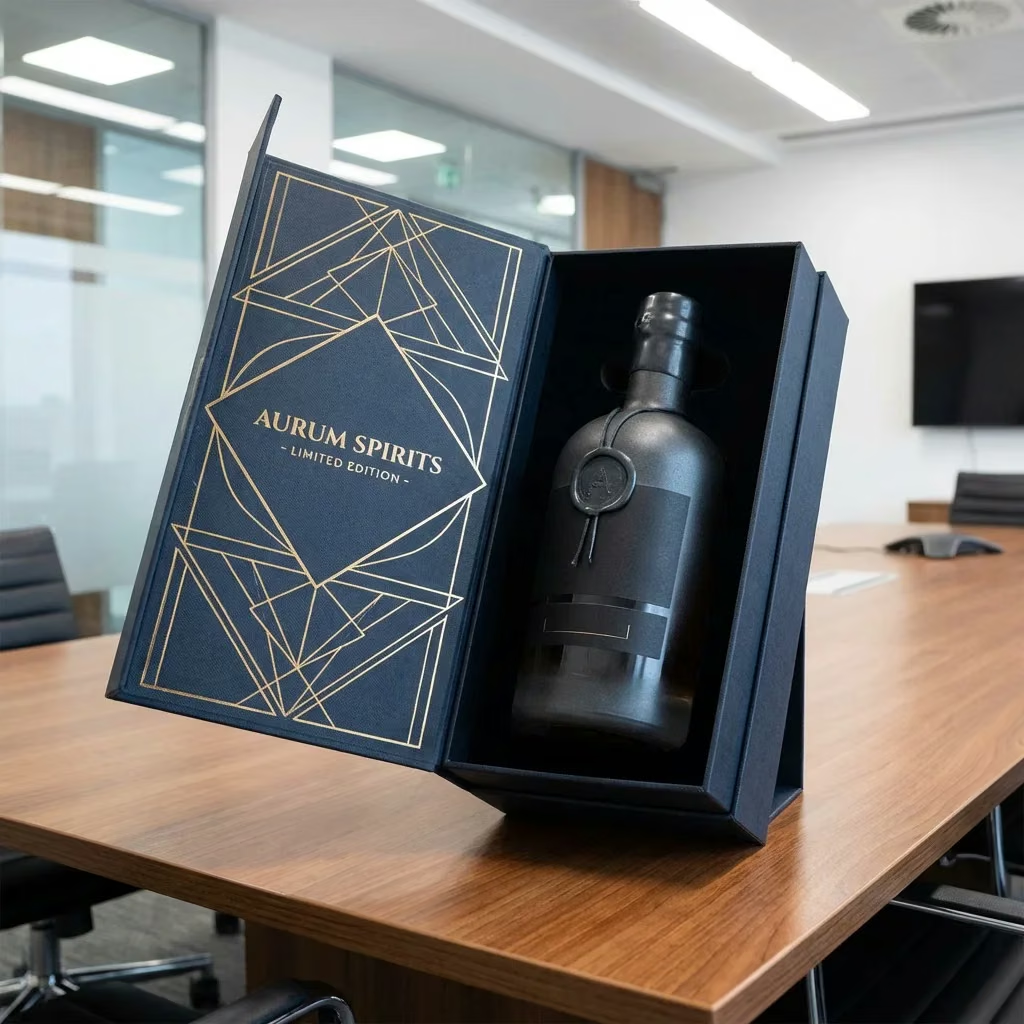
Custom packaging ROI FAQ
Questions to settle before approving the upgrade.
The answers define the evidence boundary for the calculator and the production decision.