
Short answer
Do not choose by thickness or luxury language alone.
Choose a custom rigid box when the project benefits from a ready-formed structure, deeper presentation, broad opening, or fitted keepsake experience—and the storage, packing, and shipment plan supports it. Choose a folding carton when a lighter secondary pack, compact flat supply, manual or line erection, retail efficiency, and controlled paperboard construction better fit the product.
Neither route is automatically more protective, premium, economical, or sustainable. The correct comparison includes the real product, insert, unit protection, master carton, assembly, freight, storage, failure risk, and end-of-use route.
Decision rule: price and sample both structures from one controlled brief. If the product, insert, finish, quantity, packing scope, destination, or test route changes between quotations, the comparison is no longer like for like.
Side-by-side
Compare what happens before and after the box is filled.
Unit price is only one row. Structure changes artwork, production, storage, erection, loading, protection, case packing, freight, and the final opening.
Scroll horizontally to view all columns →
| Decision | Rigid box | Folding carton | Evidence to request |
|---|---|---|---|
| Construction | Thick board components are formed and wrapped into a box that normally retains its finished shape. | Folding boxboard is printed, die-cut, creased, glued where required, and supplied flat or collapsed. | Final material specification, dieline, blank sample, printed sample, and approved packed reference. |
| Product support | The outer shell provides shape, but the insert still controls product movement, contact, and removal. | Panel stiffness, closure, base, and insert work together around product mass and handling. | Production-equivalent loaded sample, support map, no-contact zones, and movement limits. |
| Presentation | Depth, weight, wide lid movements, lift-off lids, drawers, or shoulder-neck reveals are available. | Compact panels, opening flaps, windows, print, texture, and precise finishing can support a restrained presentation. | Opening sequence, retail orientation, shelf constraints, product reveal, and removal trial. |
| Supply volume | Standard setup boxes usually ship in finished form; collapsible rigid formats need separate engineering and assembly. | Commonly supplied flat or side-seam glued and collapsed, then erected before filling. | Unit outside dimensions in supply state, bundle count, master-carton size, gross weight, and pallet plan. |
| Packing operation | May reduce erection work but needs space, individual protection, insert loading, and finished-box handling. | Requires erection and closure suited to manual, semi-automatic, or automatic packing. | Timed pack-out trial, workstation sequence, equipment constraints, scrap, and labor assumptions. |
| Decoration | Wrapped edges, seams, corners, and assembled surfaces affect print and finishing placement. | Print and finish are applied to the board before conversion; creases, glue zones, and rub paths constrain artwork. | Production dieline, finish layers, crease clearance, physical color target, and representative printed proof. |
| Landed cost | Include forming, wrapping, insert, unit protection, master cartons, storage cube, freight, and inspection. | Include board, conversion, insert, erection labor, line compatibility, storage, freight, and reject risk. | One scope sheet showing every included and excluded cost through the named delivery point. |
When rigid makes sense
Use structure to create a deliberate presentation.
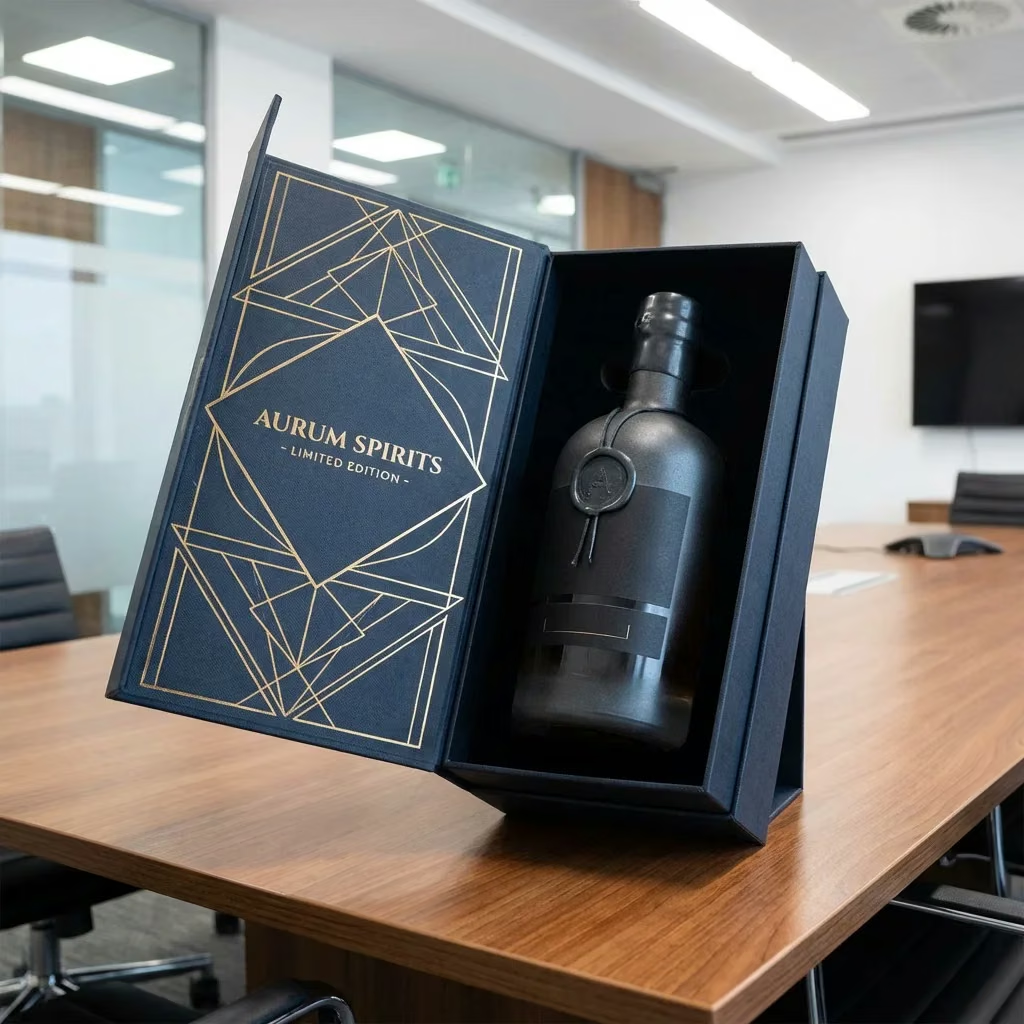
A rigid box is useful when the pack needs a broad reveal, deeper interior, fitted kit layout, repeated opening, or a presentation object that may be retained. The board shell can feel substantial, but performance still depends on construction and the loaded insert.
- Confirm finished external size before assuming the presentation is worth the storage and freight volume
- Map visible wrap seams, turned edges, corners, hinge movement, and finish registration
- Protect wrapped and decorated faces during unit packing, case packing, shipment, and unpacking
- For flat-pack options, approve assembly order, corner fixing, squareness, close, and pack-out labor
When folding makes sense
Use efficient board conversion without under-specifying the product load.
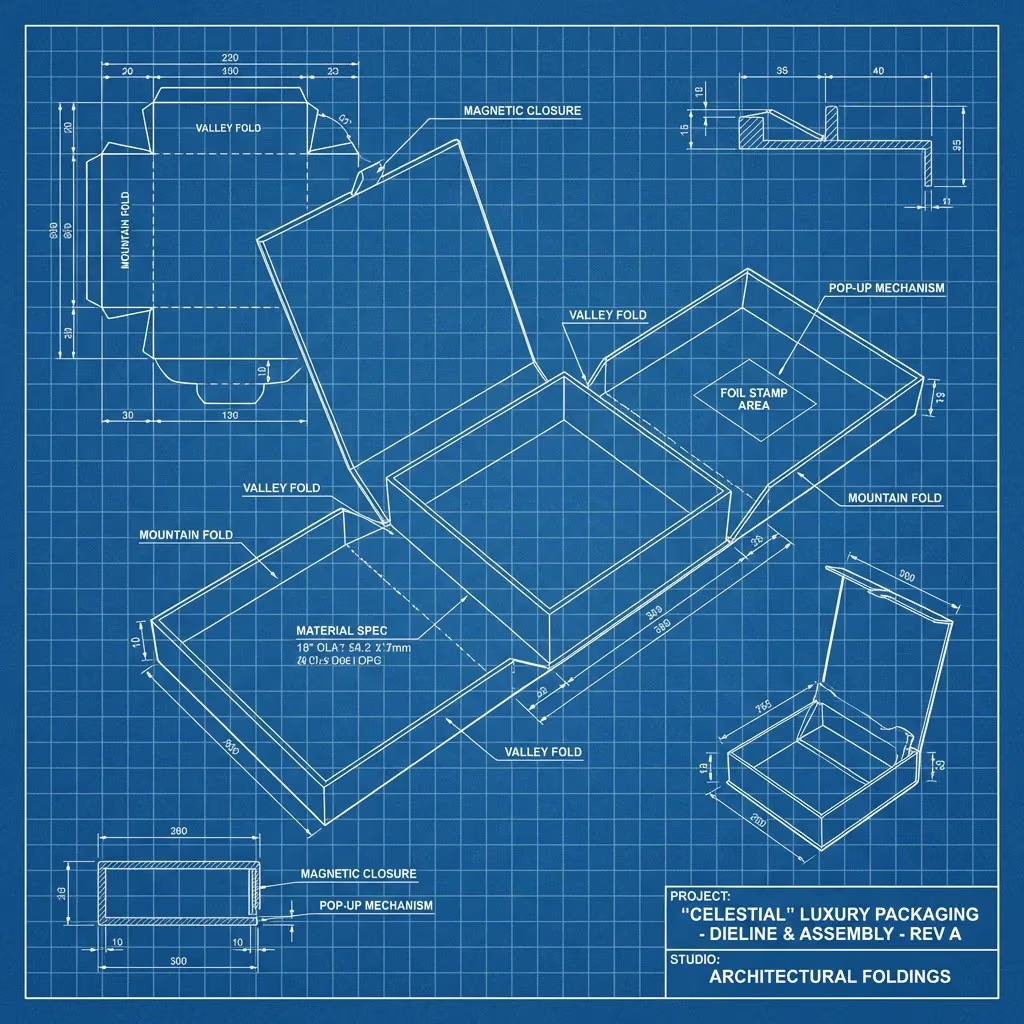
A folding carton can combine compact supply, strong graphics, tactile stock, controlled finishing, and a packing-line-compatible structure. It should be engineered around the product rather than selected only from a familiar tuck-box template.
- Specify actual board grade and caliper; GSM alone does not define stiffness, score quality, or load response
- Review bottom construction, closure, panel span, grain, crease, glue, and insert under the loaded product
- Keep high ink coverage, foil, embossing, coating, and critical graphics clear of vulnerable folds where possible
- Test erection, filling, coding, closure, case packing, and unpacking with the intended operation
Protection logic
The insert carries more of the decision than the box name.
A thick outer box cannot correct an insert that lets the product move, concentrates load, marks decoration, blocks removal, or transfers impact to a fragile component.
- Loaded envelopeRecord maximum product dimensions, filled weight, center of mass, accessories, variation, and packed orientation.
- Support mapDefine where the insert may carry, locate, separate, or cushion the product—and where it must not touch.
- ClearanceProtect caps, pumps, necks, labels, coatings, screens, edges, and other sensitive projections from the closing path and top load.
- RemovalAdd finger access, pull features, approved flex, or a clear sequence so retention does not become difficult unpacking.
- Transit systemEvaluate the primary product, display pack, insert, unit protection, master carton, void control, pallet or parcel route as one system.
Real landed cost
Compare volume and labor before comparing the final unit price.
Folding cartons often occupy less inbound space, while rigid boxes may arrive ready formed. The winner depends on which cost moves elsewhere in the system.
Scroll horizontally to view all columns →
| Cost block | Record for each route | Common omission |
|---|---|---|
| Packaging unit | Box, insert, printed components, decoration, assembly, versions, tooling, and approved protection. | Comparing a decorated rigid sample with an undecorated carton or different insert. |
| Packing labor | Erection, corner fixing, insert placement, loading, leaflet or accessory placement, closing, inspection, and case packing. | Assuming flat supply is free to assemble or formed supply needs no handling space. |
| Storage and freight | Supply-state outside dimensions, units per carton, cubic volume, gross weight, pallet pattern, route, and delivery term. | Using product dimensions instead of the measured outer shipping pack. |
| Quality and loss | Incoming inspection, scuff protection, erection rejects, closure failures, damage, rework, replacement, and disposal. | Excluding the cost of a failure that only appears after filling or shipment. |
| Change exposure | SKU versions, forecast confidence, remaining inventory, artwork revisions, storage period, and repeat-order controls. | Treating the cheapest price break as the lowest cost per usable order. |
Freight note: carriers may compare actual and volumetric weight, and the applicable divisor and rules depend on the service and route. Use measured external shipping dimensions and the current carrier quotation; do not convert a generic example into a project promise.
Sample and transit proof
Test the filled system on the route it will actually travel.
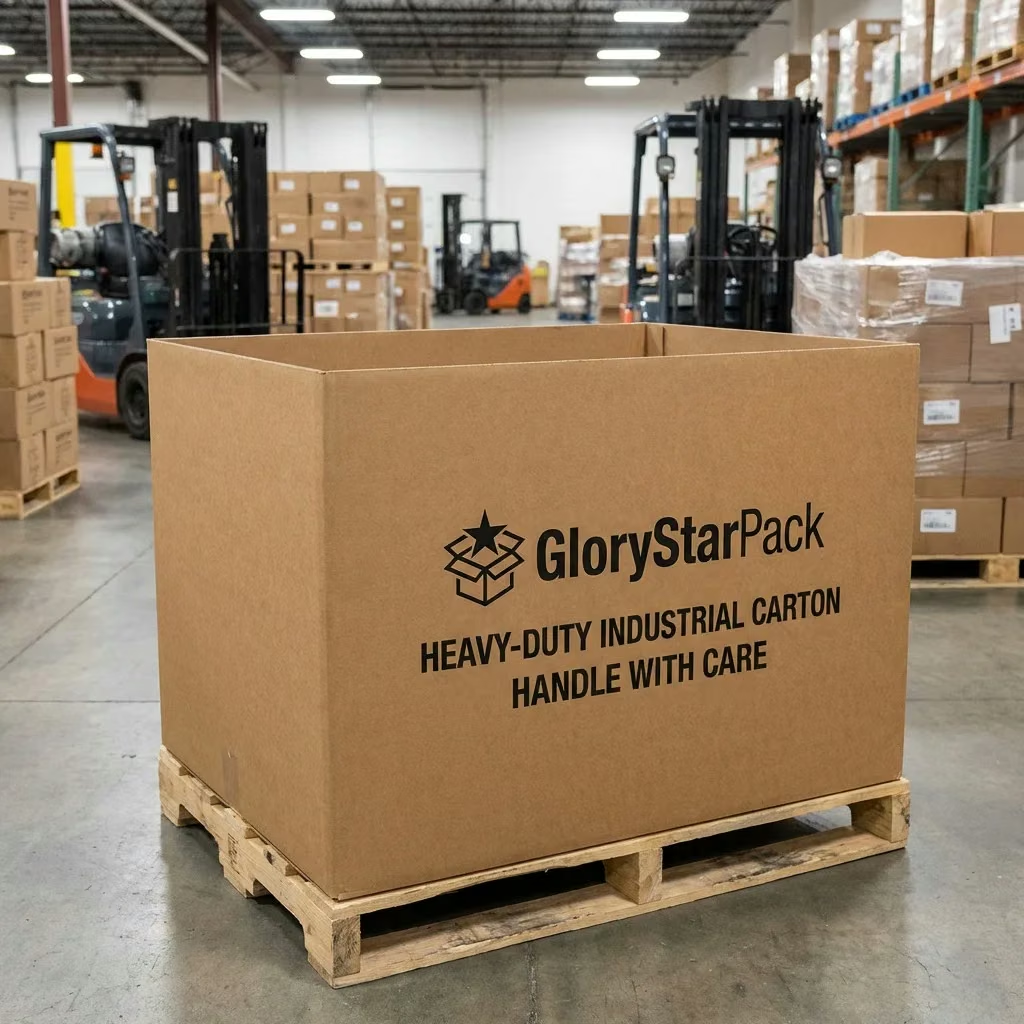
Start with structural blanks to compare fit, loading, closing, opening, and removal. Then use production-representative materials and decoration to check crease, wrap, scuff, glue, finish, and repeated handling. The final transit plan should reflect the distribution mode and the project's acceptable outcomes.
- Use the intended product or an agreed production-equivalent specimen at the correct packed weight
- Include the real insert, unit protection, master carton, closure, orientation, and pack count
- Define failures before testing: movement, breakage, leak, cap contact, panel bulge, base deflection, scuff, opening, or presentation loss
- Select a relevant procedure with a qualified test partner; ISTA 3A is one general-simulation route for applicable individual parcel shipments up to 70 kg
A test result belongs to the tested product-and-package configuration. Material, dimensions, pack count, route, or product changes may require review or retesting.
Community signal
Why buyers keep asking this question.
Reddit is useful for identifying buyer language and uncertainty, not for setting a production specification.
A recent PackagingDesign discussion asked whether a heavy perfume bottle needs a rigid box or whether a tuck carton with an insert can be sufficient. The useful signal is that buyers are trying to balance protection, perceived luxury, bulk, cost, and shipping—not simply choose the thickest material. Another recurring discussion shows that even experienced participants use terms such as rigid box, setup box, hinged box, and clamshell differently, which makes drawings and physical samples more reliable than names alone.
This guide turns those questions into a controlled decision path. Community prices, vendor claims, comments, and isolated constructions are not treated as verified performance data.
RFQ checklist
Ask both suppliers to quote the same evidence.
A neutral brief lets the supplier recommend a route without hiding the assumptions that make one quotation appear cheaper.
Loaded facts
Maximum L × W × H, filled weight, product variation, center of mass, sensitive areas, orientation, accessories, and removal needs.
Comparable scope
Quantity by SKU, forecast confidence, target cost basis, destination, delivery term and named place, schedule, repeat-order plan, and storage limits.
Two sample routes
Rigid and folding-carton concepts using the same insert objective, artwork hierarchy, finish priorities, unit protection, and test assumptions.
Pack and ship
Manual or machine pack-out, workstation constraints, outer carton, pallet or parcel route, inspection, test plan, and required documents.
Use the packaging sample approval checklist before releasing either route
Research boundaries
Use sources for the question they can answer.
Reddit's tuck-versus-rigid discussion and a rigid-box naming discussion are used only as buyer-language and problem signals. The ISTA test-procedure directory defines distribution-test families and scope. DHL's international shipping guidance explains why dimensions and volumetric weight can affect freight cost.
The final board, construction, insert, cost, test method, carrier rules, certification, recycling route, and delivery recommendation must be confirmed for the actual product, production site, destination, and distribution system.
Rigid box and folding carton questions
Resolve the complete pack before choosing.
Compare two structures
Send one product brief. Request two controlled routes.
Share product dimensions and packed weight, quantity by SKU, insert objective, opening and removal needs, finish priorities, packing operation, delivery country, target date, and any existing artwork or reference.