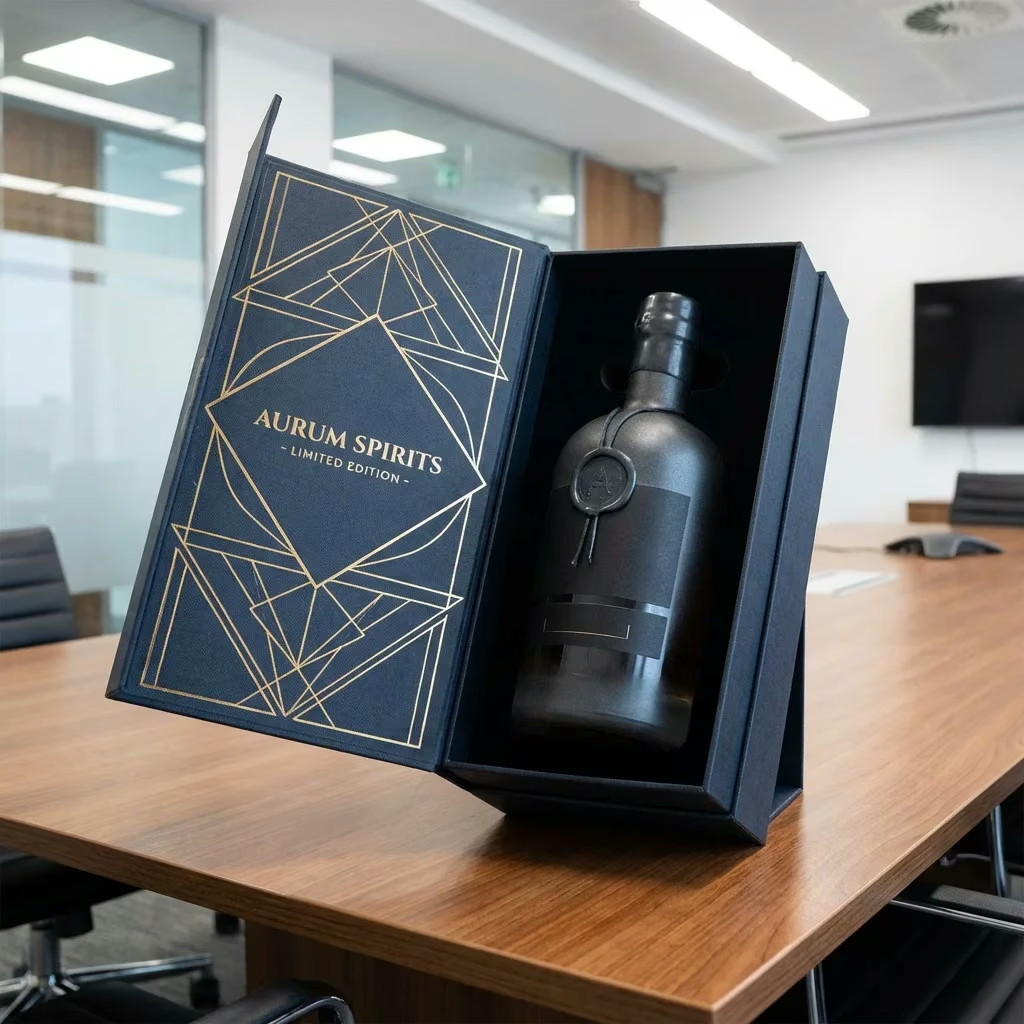
Short answer
A bottle capacity is not a packaging specification.
A production-ready wine gift box starts with the maximum filled-bottle envelope and load by SKU, protected surfaces, approved support zones, presentation orientation, insert and removal route, accessory map, gift-box structure, master-carton pack-out, distribution route, acceptance criteria, representative testing, and revision control.
The custom wine box page covers commercial development and quotation. This guide controls the buyer's technical brief. It does not prescribe a universal bottle clearance, certify a structure for shipping, select a carrier test, assess alcohol-shipping legality, or replace production-equivalent samples and qualified testing.
Free planning tool
Bottle-set fit and loaded-mass planner.
Model an upright side-by-side set from the maximum bottle dimensions and buyer-entered planning allowances. Use millimetres and grams consistently.
Calculator boundary: this is a rectangular planning envelope, not a dieline, cavity drawing, finished box size, board specification, cost, MOQ, compression value, shipment mass, or test approval. It assumes identical round-bottle envelopes in one upright row. Bottle variation, shoulder and neck geometry, non-round sections, insert compression, contact pressure, seams, lining, loading path, removal, box tolerance, glass strength, closure, liquid movement, carrier rules, and distribution hazards remain outside the arithmetic.
Reddit demand signals
Presentation failures become handling and breakage risks.
Community reports help identify buyer language and failure modes. They are not dimensional values, material specifications, carrier approval, or test evidence.
Handles tear and bottoms sag after the bottle is added
A packaging discussion began with premium-looking wine packs that became awkward under real load. Translate that concern into filled mass, carry orientation, handle anchorage, base load path, deflection limits, lift trials, and acceptance evidence—not a generic material claim. Read the wine gift-packaging discussion.
A “fragile” box can still be thrown between conveyors
One traveler described a purpose-built wine case being thrown during transfer. The anecdote is not a test result, but it is a useful prompt to define impact, drop, vibration, compression, closure, bottle separation, leak containment, and gift-box surface criteria for the actual route. See the travel-packaging experience.
Buyers ask whether a wine shipper needs added wrapping
A recent thread asks if a formed wine shipping box is enough or needs more protection. Replace guesswork with the supplier's complete pack-out, bottle-specific restraint, gross mass, route, carrier requirements, declared acceptance criteria, representative testing, and shipment monitoring. Review the wine-shipping question.
Bottle master
Control every bottle SKU before drawing the insert.
The Australian Wine Research Institute notes that common bottle shapes vary in height, width, weight, neck, and shoulder, and recommends sourcing each glass supplier's product specification.
Scroll horizontally to view all columns →
| Control | Record | Packaging decision |
|---|---|---|
| Maximum envelope | Overall height, full body cross-section, base, shoulder, neck, closure, tolerances, shape family, and drawing revision. | Cavity, loading direction, top and side clearance, divider position, common-box feasibility, and inspection points. |
| Loaded condition | Filled mass, fill and closure state, accessories, documents, product temperature scenario, and center-of-mass concern. | Base load path, insert construction, closure demand, handle review, gift-box mass, master-carton gross mass, and handling method. |
| Contact map | Label and capsule edges, decorated glass, seams, embossed areas, closure, visible faces, scuff risk, and permitted support zones. | Insert contact, lining, edge treatment, pressure, movement, removal grip, accessory isolation, and surface inspection. |
| SKU range | Each bottle and accessory record, quantity, artwork, gift configuration, insert version, carton group, and approved substitute rules. | Shared or separate structure, adapters, mixed-SKU controls, proof set, packing instruction, labels, and change release. |
Support, restraint, release
Carry the weight at the base; locate the bottle at approved zones.
An insert has to work as part of a load path and opening sequence—not only make the bottle look centered in a rendering.
Trace the load to the gift-box base
Define where the filled bottle base sits, how the insert transfers load, where openings and accessory wells interrupt material, and how the base behaves while lifting, carrying, tilting, and closing.
Prevent glass contact without squeezing decoration
Separate multiple bottles; locate approved body, shoulder, or neck regions; protect the label, capsule, closure, and glass finish; and test movement in every stated orientation.
Prove removal with the loaded bottle
Approve finger access, lift ribbon or tray, grip, force, posture, first-bottle removal, accessory sequence, replacement, and reclosure without tearing the insert or rubbing protected surfaces.
Compare custom insert routes · Compare paperboard, molded pulp, EVA, and EPE
Presentation structure
Choose the opening after the loaded sequence is mapped.
A lid-and-base box, hinged magnetic box, drawer, collapsible rigid structure, or paper tube changes access, load path, opening space, removal, formed-shipment cube, assembly, and surface exposure.
- Confirm whether the bottle is upright, horizontal, angled, or revealed after an accessory layer
- Document lid, hinge, drawer, ribbon, handle, magnetic, shoulder-neck, or telescoping interactions under load
- Check that opening the pack cannot tip, release, or collide bottles and accessories
- Approve finished outside dimensions, unit mass, reopening, display footprint, barcode or warning labels, and retail packing

Outer pack and test brief
Test the bottle, insert, gift box, and shipper as one system.
ISTA advises using the current procedure, representative product and package samples, predeclared damage and degradation criteria, complete test sequences, documented results, and actual-shipment monitoring.
Scroll horizontally to view all columns →
| Gate | Define before approval | Retain as evidence |
|---|---|---|
| Outer shipper | Gift boxes per case, orientation, dividers, cushioning or restraint, void control, surface separation, closure, gross mass, outside dimensions, labels, mixed-SKU rule, and pallet or parcel route. | Pack drawing, component specifications, loading photos, carton markings, measured mass and dimensions, and released work instruction. |
| Acceptance criteria | Bottle breakage, leakage, closure movement, label or capsule damage, insert release, gift-box deformation, scuff, corner crush, opening function, and allowed package degradation. | Written pass/fail definitions agreed before testing, sample IDs, environmental conditioning, test level, sequence, deviations, images, and inspection record. |
| Test selection | Package type, mass, shipment mode, geography, distribution path, carrier or retailer requirement, known hazards, thermal needs, and certification purpose. | Current procedure reference selected with qualified parties, laboratory status where applicable, representative unused samples, report, disposition, and retest decision. |
| Field learning | Shipment sample, route, season, handling points, damage code, leak response, photos, returns, and customer or warehouse feedback. | Lot and pack revision, event record, root cause, corrective action, validation, and controlled specification update. |
Thermal boundary: a paper gift box or standard shipper is not automatically thermal protection. If heat, cold, freezing, condensation, or dwell time could affect the wine, closure, label, glass, adhesive, or pack, define that exposure and obtain a separate qualified thermal and distribution assessment.
Use ISTA's current design and test guidance · Build the master-carton specification
Approval gates
Make the sample, data, and pack-out reproducible.
A signed beauty sample is not enough when bottle load, insert behavior, carton configuration, or the distribution route is still undefined.
Release bottle and accessory masters
Approve every SKU, maximum geometry, filled mass, tolerance, protected surfaces, labels, closures, artwork, quantities, and substitution rules.
Approve the loaded presentation sample
Check load path, contact, movement, removal, surfaces, opening, handle, accessories, dimensions, mass, workmanship, and reclosure.
Release the complete shipping configuration
Freeze gift boxes per case, orientation, separation, void control, closure, mass, dimensions, markings, pallet or parcel rules, and packing photos.
Apply predeclared acceptance criteria
Use representative samples, the agreed current procedure, complete sequence, damage definitions, documented results, corrective action, and retest.
Inspect and protect the released revision
Define sampling, critical dimensions, load and fit checks, visual limits, carton counts, change notification, retained evidence, and shipment monitoring.
Comparable RFQ
Ask every supplier to quote the same controlled scope.
Download the CSV to assemble one record per bottle or approved gift configuration, then attach drawings, photos, artwork, route data, and the sample or test requirement.
- Bottle setSKU, shape, production drawing, maximum dimensions, tolerances, filled weight, closure, label, capsule, protected surfaces, physical samples, and units per gift box.
- Presentation packOrientation, structure, insert route, contact map, removal, accessories, opening sequence, materials, print and finish, artwork version, quantity by configuration, and workmanship targets.
- Production evidenceDieline, structural sample, decorated sample, loaded sample, critical-dimension record, color and finish standards, inspection plan, production photos, retained samples, and change control.
- Distribution packUnits per carton, dividers and cushioning, orientation, closure, gross mass, outside dimensions, labels, pallet or parcel route, destination, target date, acceptance criteria, test scope, and report responsibility.
- Commercial boundaryTooling, setup, MOQ by configuration, sample and test cost, unit price, overrun or underrun, packing, Incoterm and named place, freight scope, lead-time basis, taxes and duty boundary, and quote validity.
Buyer questions
Wine bottle gift box specification FAQ.
Final dimensions, materials, structure, insert, shipper, acceptance criteria, and tests depend on the released bottle set and actual route.