
Short answer
Rigid box price follows the controlled specification, not the product category name.
A useful custom rigid box quotation starts with the packed product and finished dimensions. It then identifies the structure, board, wrap, print, finish, insert, quantity by artwork version, assembly, individual protection, cartons, quality scope, and destination.
Changing one input can affect several others. A deeper lid uses more board and wrap, may need additional assembly control, changes the master-carton count, and can increase freight volume. A lower unit price is not a saving if the quote omits the insert, surface finish, protective packing, or delivery scope required by the project.
Use one frozen brief. Ask every supplier to price the same finished dimensions, product load, structure, materials, artwork, quantity, packing, Incoterm, named place, and target date. Record alternatives as separate options.
Cost map
Seven groups explain most quotation differences.
The exact contribution of each group is project-specific. The value of the map is that it makes omissions and different assumptions visible.
Scroll horizontally to view all columns →
| Cost group | What changes | What to specify |
|---|---|---|
| Finished size | Board and wrap area, sheet yield, insert area, handling, carton count, and shipment volume. | Internal or external dimensions, product tolerance, orientation, clearance, and packed weight. |
| Construction | Number of components, wrapping steps, joints, hinges, closures, fitting work, and assembly time. | Lid-and-base, shoulder-neck, magnetic, drawer, book-style, or collapsible construction. |
| Board and wrap | Material grade, thickness, color, texture, print route, lamination, edge appearance, and usable yield. | Performance objective, visual reference, print coverage, touch, sheen, and approved physical sample. |
| Insert | Material, cavity geometry, layers, cutting, wrapping, assembly, retention, and product loading. | Product dimensions and weight, fragile surfaces, removal path, accessories, and presentation height. |
| Decoration | Plates or dies, setup, foil area, emboss depth, register, passes, spoilage allowance, and inspection. | Print files, color references, finish areas, artwork scale, tolerance, and one priority focal treatment. |
| Quantity and versions | Setup allocation, material purchasing, changeovers, version sorting, packing labels, and administration. | Quantity per size and artwork version, repeat forecast, launch split, and overrun or underrun terms. |
| Packing and delivery | Individual protection, master cartons, dividers, carton efficiency, gross weight, pallets, freight, and destination charges. | Pack-out method, carton limits, destination, required date, Incoterm, named place, and freight scope. |
Dimensions and yield
Right-size the loaded box before comparing decoration.
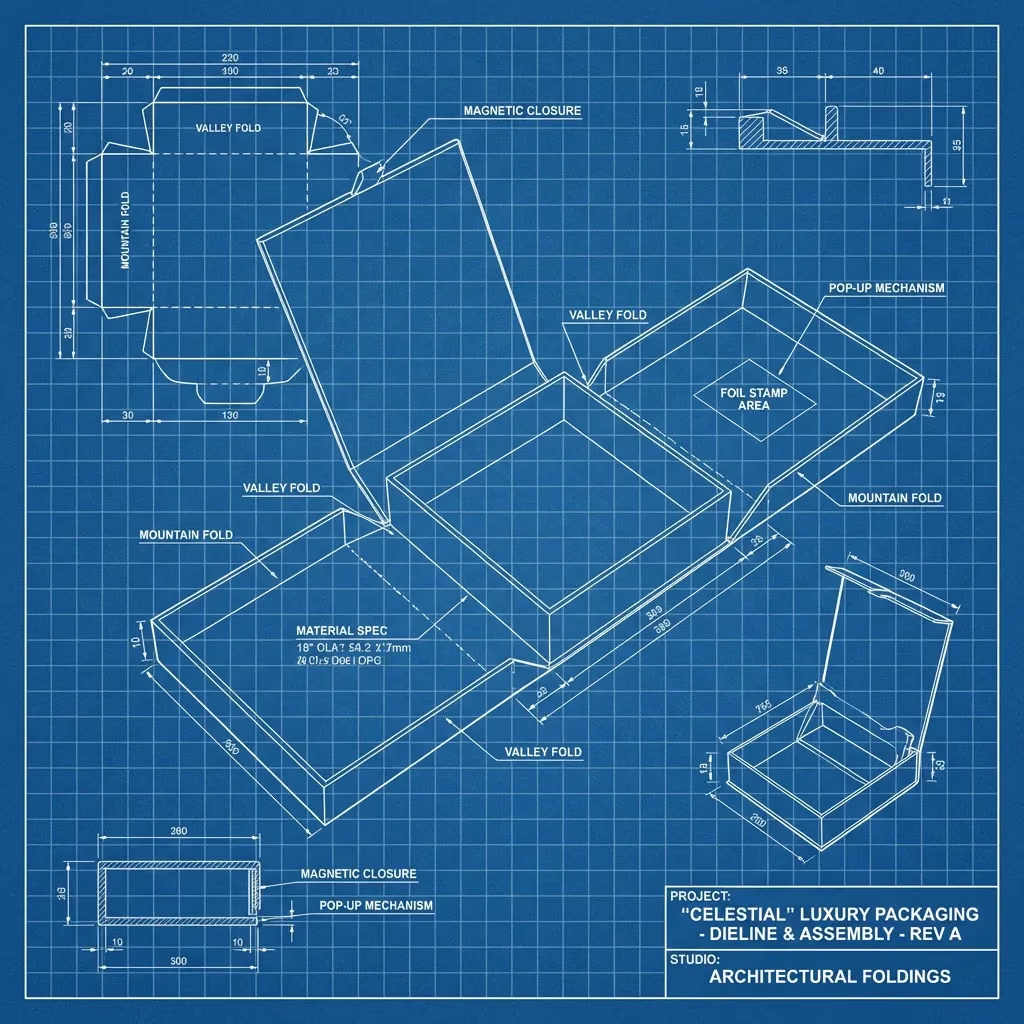
Finished dimensions affect every rigid component and often the insert, wrap, protective sleeve, carton, and pallet plan. The important size is the size that safely fits the real packed product—not a rounded marketing dimension.
- Measure the product at its maximum condition and include accessories or documentation
- Define presentation height, finger access, sensitive-surface clearance, and removal path
- Distinguish internal box dimensions from finished external dimensions
- Compare units per master carton and shipment volume after right-sizing
A smaller box can still cost more when its layout wastes material, its insert is complex, or its tight geometry demands more assembly control.
Construction
Count parts, interfaces, and assembly—not just walls.
Each moving or fitted interface adds a behavior to approve and a production condition to hold consistently.
List every component
Base, lid, neck, tray, sleeve, hinge, magnet, ribbon, insert, liner, documentation well, and protection should be visible in the scope.
Map every covered face
External and internal wrapped parts require material, cutting, positioning, turning, bonding, edge work, and inspection.
Control the interfaces
Lid friction, shoulder reveal, magnetic close, drawer travel, insert retention, and product clearance need sample references.
Price the delivery state
Assembled and collapsible rigid boxes create different volume, assembly, instruction, and quality requirements.
If the opening decision is unresolved, compare magnetic and drawer boxes from one identical product brief.
Materials and finish
Spend where the buyer can see or feel the difference.
More material and more processes do not automatically create a stronger brand impression. Make the hierarchy deliberate.
Match material to the structure
Choose board around span, load, lid behavior, and insert support. Choose wrap around print, texture, finish, edges, handling, and the approved surface reference.
Protect the real product
Compare paperboard, molded pulp, foam, and wrapped inserts by retention, removal, surface protection, geometry, assembly, and disposal needs.
Give one treatment a job
Use print, foil, emboss, deboss, or spot gloss where it supports hierarchy. The foil versus spot UV guide explains different setup and surface constraints.
Quantity and MOQ
Separate total volume from production versions.
Two orders with the same total units can have different economics when sizes, artwork, materials, inserts, or packing instructions change.
Scroll horizontally to view all columns →
| Quantity input | Why it matters | How to request the quote |
|---|---|---|
| One structure, one artwork | Setup and material planning are concentrated in one repeatable configuration. | Show first-run quantity and a realistic repeat forecast separately. |
| Several artwork versions | Printing, sorting, identification, packing, and changeovers may be version-specific. | List quantity, artwork, barcode, and packing label for every version. |
| Several sizes | Board, wrap, insert, tooling, yield, carton count, and assembly references may change. | Treat each size as a controlled specification, even when the visual system is shared. |
| Launch plus repeat | A lower launch quantity and a later repeat run may use different production or material assumptions. | Request clearly labeled options instead of blending both volumes into one unit price. |
For the broader commercial picture, use the custom packaging cost and MOQ guide.
Value engineering
Reduce cost in the specification, not after production.
Good value engineering protects the product and the brand priority while removing material, steps, variation, or freight volume that does not earn its place.
- Right-size the internal volume and simplify hidden wrapped components
- Use one focal finish instead of several competing decorative processes
- Standardize board, wrap, insert logic, or accessories across related versions where feasible
- Reduce unnecessary insert layers while preserving retention, removal, and surface protection
- Compare assembled and collapsible options using destination labor and quality controls
- Improve individual protection and master-carton layout together
Approve every change on a loaded physical sample. A rendering cannot prove fit, opening feel, surface behavior, assembly, or shipment condition.
Comparable RFQ
Ask for a price breakdown that exposes assumptions.
- product dimensions, maximum packed weight, orientation, sensitive surfaces, and removal path;
- internal and external box dimensions, structure, number of components, and required opening behavior;
- board and wrap direction, print coverage, color reference, texture, lamination, foil, emboss, or other finish;
- insert material, cavity layout, product retention, accessory spaces, and presentation height;
- quantity by size and artwork version, repeat forecast, tooling, samples, and inspection scope;
- individual protection, master-carton limits, pallet assumptions, destination, target date, Incoterm, and named place.
Request the one-time, recurring, optional, and delivery costs as separate lines where applicable. Then use the packaging sample approval checklist and production and delivery guide before treating the lowest quoted unit price as the lowest landed risk.